Weekly ecommerce tips, deals & news.
XaaS stands for “Everything-as-a-Service” (sometimes “Anything-as-a-Service”). It’s the umbrella idea that almost any tool or product can be rented online. You access it instead of buying it outright. Software, computing power, storage, and even physical goods can arrive on a subscription. You pay a recurring fee for ongoing access, and the provider handles upkeep behind the scenes. For store owners, it shapes both the tools you run on and the products you sell.
The “X” in XaaS is a stand-in for “anything.” It’s a catch-all for a long list of service models. You’ve likely heard of the three big ones already. They are SaaS, PaaS, and IaaS.
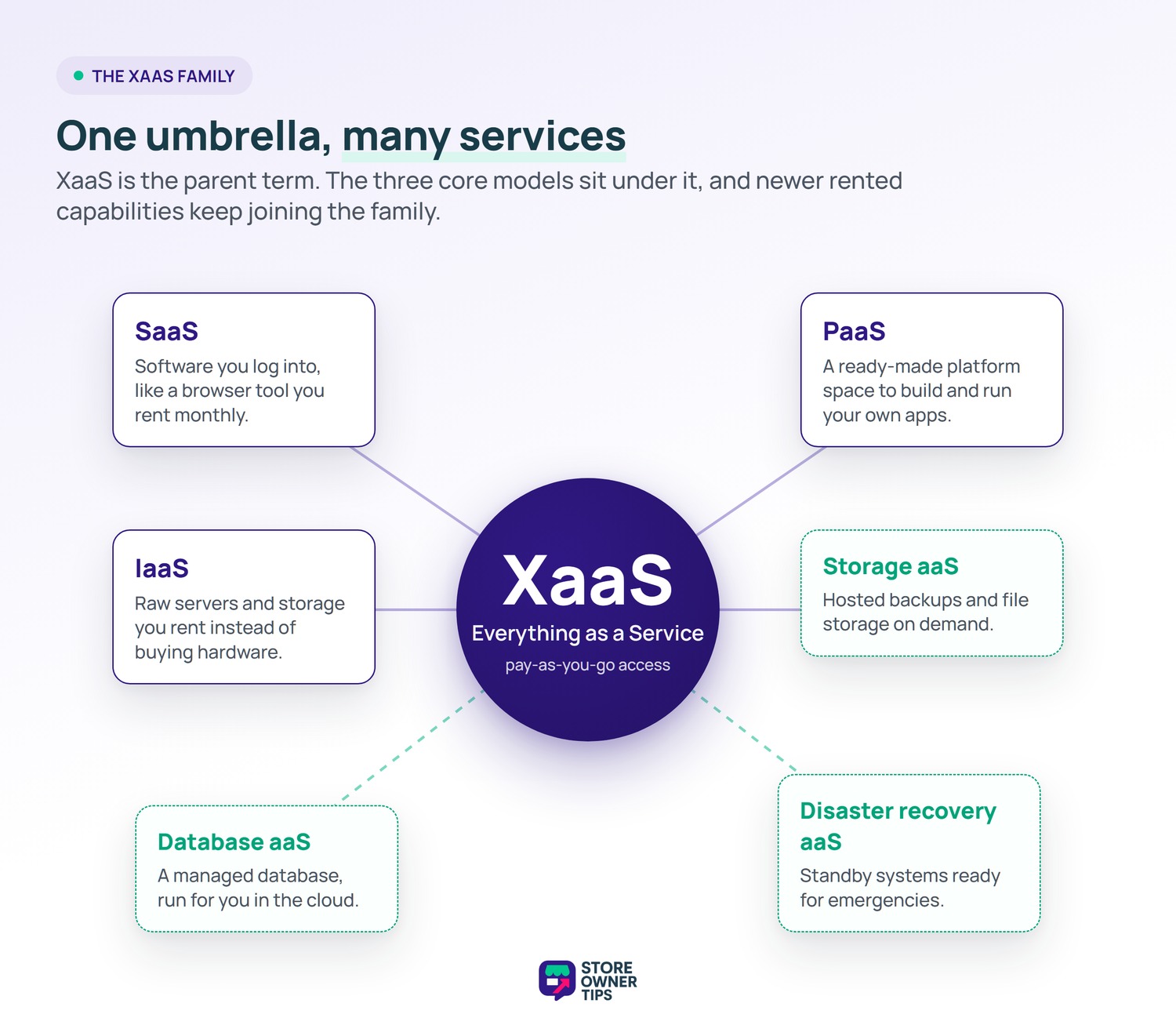
SaaS means Software-as-a-Service, like a tool you log into in your browser. PaaS means Platform-as-a-Service, a ready-made space to build apps. IaaS means Infrastructure-as-a-Service, where you rent raw servers and storage. XaaS is the parent term that holds all of them together.
The family keeps growing well beyond those three. There’s storage-as-a-service for backups and database-as-a-service for your data. There’s even disaster-recovery-as-a-service for emergencies. If a capability can be delivered online, someone now rents it out.
One trait ties every flavor together. You pay only for what you use, and you scale up or down on demand. This pay-as-you-go billing is the heart of the whole model. It’s the same logic as a utility bill for water or power.
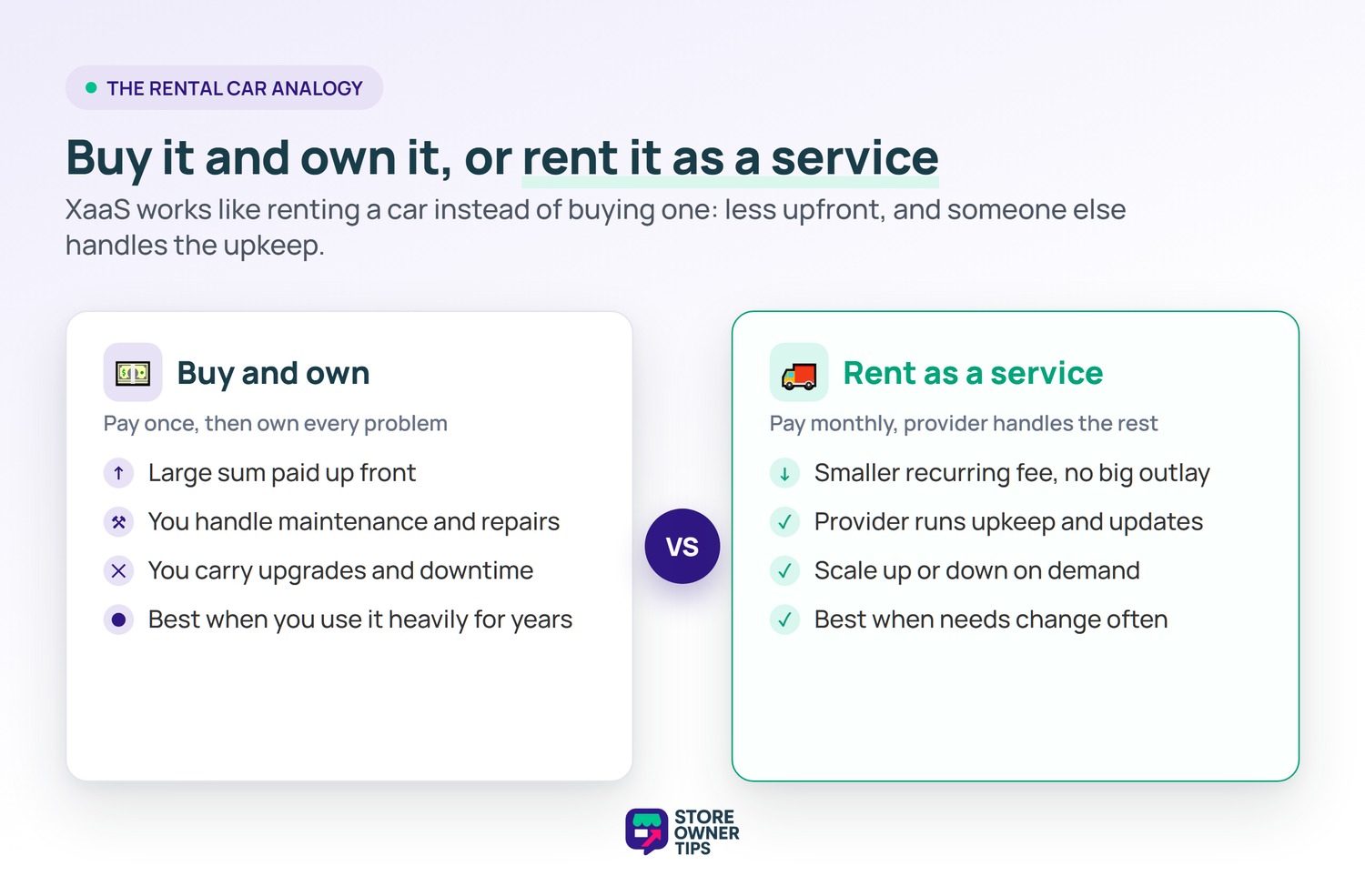
Think of XaaS like renting a car instead of buying one. When you buy, you pay a huge sum up front. You also own every future problem, from oil changes to flat tires.
When you rent, you pay a smaller fee for as long as you need the car. The rental company handles the maintenance, the insurance, and the upgrades. XaaS works the same way for digital tools. You get the use of something powerful without owning or maintaining it.
Almost every tool behind your online store is already a form of XaaS. Your hosting is rented. Your email platform, your payment processor, and your analytics are all rented too.
This shift toward services is huge and growing fast. The global everything-as-a-service market is projected to reach USD 7,726.66 billion by 2034. That’s why renting tools beats building them yourself for most small stores. You skip the upkeep and only pay for what you actually use.
Think about what it would take to do this the old way. You’d buy your own servers and hire staff to patch them. You’d build your own payment system and keep it secure. XaaS hands all of that to specialists for a monthly fee.
Not every rented tool earns its keep. The trick is to weigh the monthly fee against the value it returns. A tool that saves you hours or wins extra sales is worth it.
Watch out for “subscription creep,” though. Small fees add up fast when you forget about them. Review your services every quarter and cancel what you don’t use. Then make sure you can export your data before you ever commit.
XaaS isn’t just about the tools you rent. It’s also a model you can offer to your own shoppers. Selling “as a service” means selling access over time instead of a one-time item.
A coffee brand can sell a monthly bean delivery. A pet shop can ship food on a schedule. This turns single sales into recurring revenue you can predict and plan around.
The whole subscription category is booming as a result. By one estimate, the wider subscription e-commerce market was worth USD 2,719.54 billion in 2025. Shoppers now expect the option to subscribe and save. Offering it can set your store apart from one-time sellers.
There is a catch worth naming, though. Subscriptions only pay off if people stay subscribed. So keeping your churn rate low matters as much as signing people up. A strong loyalty program helps members stick around.
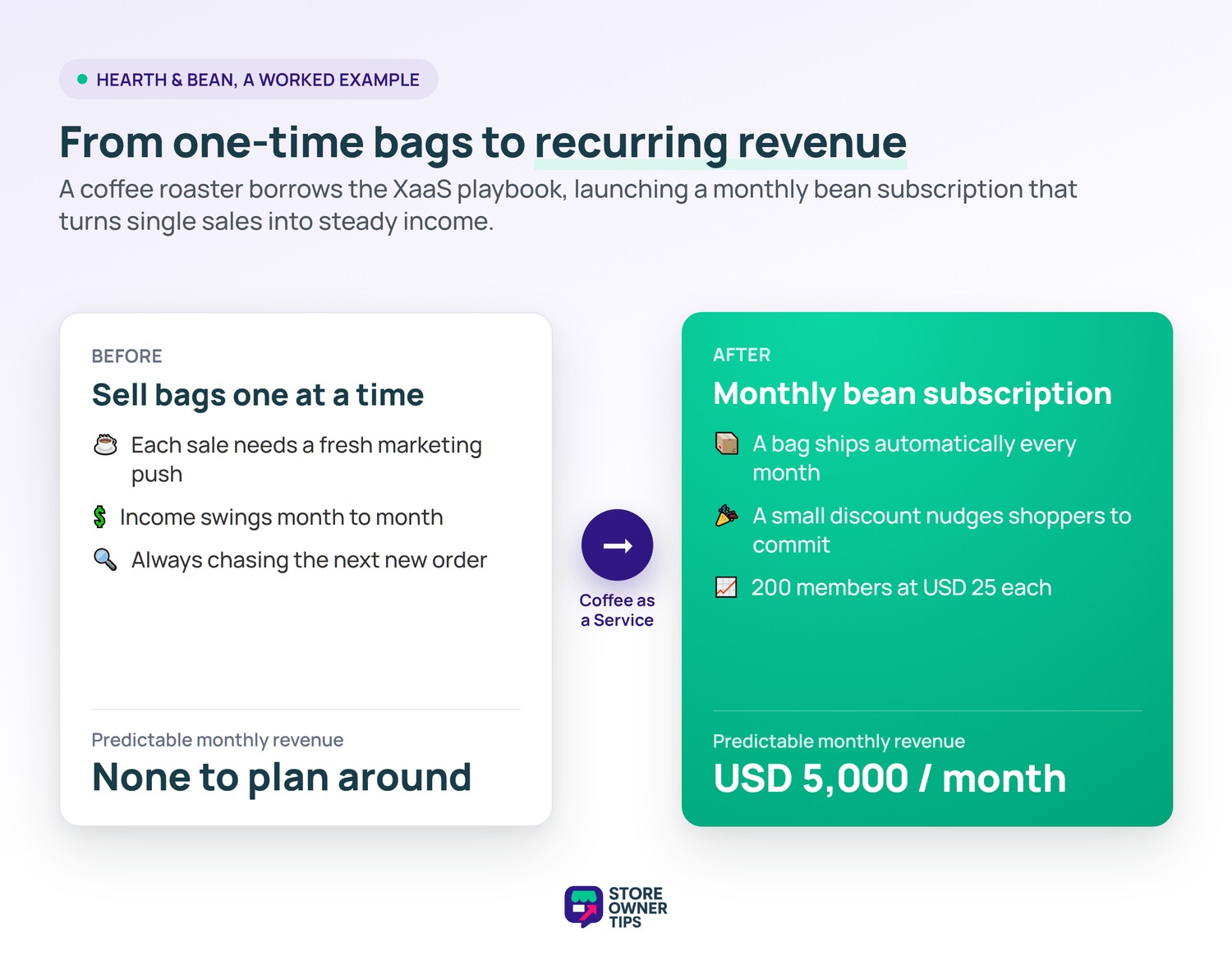
Imagine a small WooCommerce brand called Hearth & Bean, a coffee roaster. For years, they sold bags of beans one at a time. Each sale required a fresh marketing push to win the next order.
The owner decides to borrow the XaaS playbook for her own products. She launches “Coffee-as-a-Service,” a monthly bean subscription. Shoppers pick a roast and get a bag shipped every month automatically.
The store itself already runs on rented services. Hosting, email, and payments are all subscriptions she pays monthly. Now she’s simply passing that recurring model on to her customers.
Setting it up is easier than she feared. A subscription tool plugs into her existing checkout and bills cards automatically. She offers a small discount to anyone who commits to the monthly plan. That nudge makes the subscription feel like the obvious choice.
Say 200 customers join at USD 25 per month. That’s USD 5,000 in predictable revenue every single month. She no longer relies on chasing every new sale from scratch.
This recurring model has real momentum behind it. The subscription e-commerce market is forecast to hit USD 49.77 billion by 2035. Her customer acquisition cost drops too, since each shopper now pays many times over. The big risk is people quitting the plan, so she watches that closely.
To protect that revenue, she keeps the value obvious every month. She rotates fresh roasts and adds a members-only discount. As a result, fewer people cancel, and the monthly total holds steady. Over a year, those 200 members are worth far more than 200 one-time buyers.
The clearest opposite of XaaS is the old “buy it and own it” model. With ownership, you pay once and the thing is yours forever. You also take on every cost of running and fixing it.
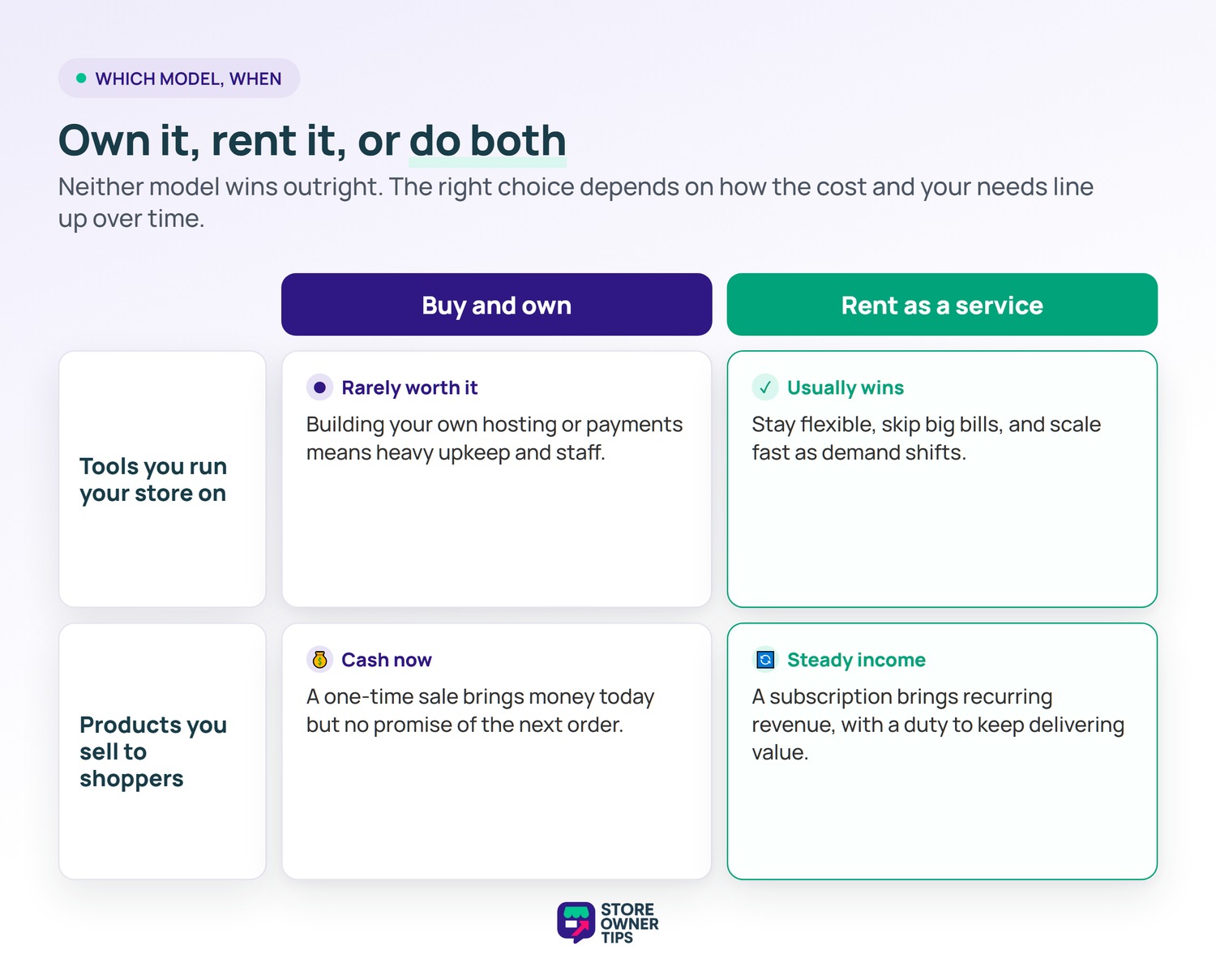
With XaaS, you never own the asset, but you never maintain it either. Ownership suits things you’ll use heavily for years. The service model wins when needs change often or upkeep is a burden.
For most online stores, renting tools is the smarter path. You stay flexible, you avoid big upfront bills, and you can scale up fast. You only commit to owning when the math clearly favors it.
The same trade-off plays out on the selling side too. A one-time sale gives you cash now but no future promise. A subscription gives you steady income but a duty to keep delivering value. Many stores blend both, selling single items alongside subscription plans.
XaaS means renting almost any tool or product as an ongoing service. Instead of buying something outright, you pay a recurring fee for access. The provider handles all the upkeep behind the scenes for you.
Not quite, though people often mix them up. SaaS is only the software slice of the model. XaaS is the bigger umbrella that also covers platforms, infrastructure, and physical goods sold as a service.
It applies in two ways at once. First, the tools you run your store on are mostly rented services. Second, you can sell your own products “as a service” through subscriptions and memberships.
XaaS is the quiet engine behind modern e-commerce, on both sides of the counter. It powers the rented tools you run your shop with. On top of that, it gives you a proven way to earn predictable, recurring income. Understanding it helps you spend smarter and sell in a way that keeps customers coming back. Treat it as a lever, not just a cost, and it can steady your whole business.
Copyright © StoreOwnerTips.com. All Rights Reserved.
