Weekly ecommerce tips, deals & news.
Answer Engine Optimization (AEO) is the practice of shaping your content to become the direct answer a shopper sees. That answer might be a featured snippet, a voice assistant reply, or an AI answer box. The goal is to be the response, not just a link near it. For online stores, AEO keeps you visible as people expect instant answers.
An answer engine gives a direct response instead of a list of links. Google’s featured snippets are one early example. Voice assistants and AI chat tools are newer ones.
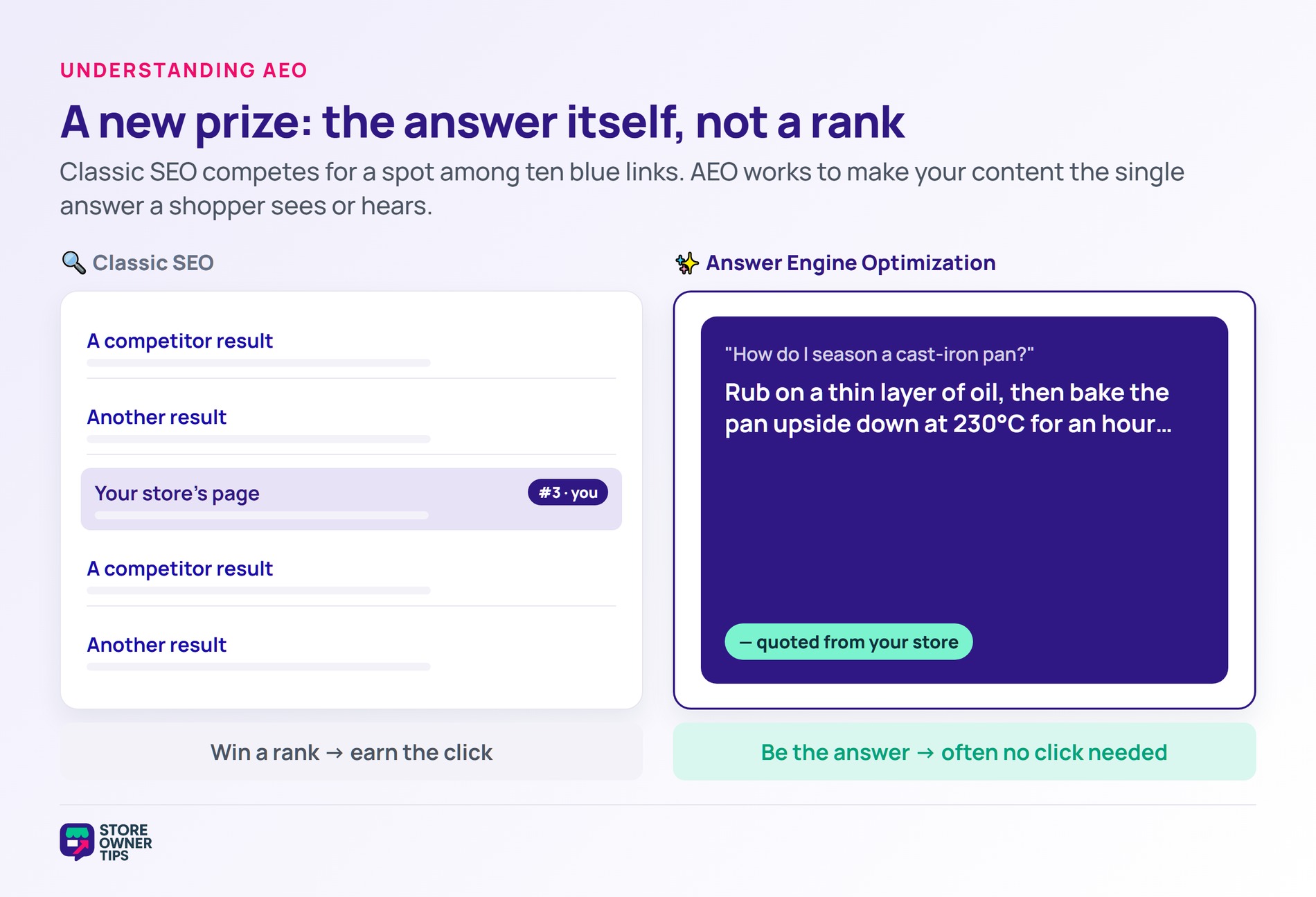
AEO is the work of becoming that chosen answer. Think of it like being the friend everyone calls with a question. You are not in the phone book; you are the trusted voice on the line.
Often the shopper never clicks a link at all. The answer appears on the spot, a pattern called zero-click commerce. AEO makes sure your brand is the one being quoted.
Classic SEO competes for a rank among ten blue links. It assumes the shopper will click through to your page. AEO assumes they may never click at all.
So the unit of victory changes. SEO wins a position; AEO wins the spoken or displayed answer itself. That shift rewards content that resolves a question on the spot.
In practice, the two overlap heavily. Strong rankings still feed many answer boxes. However, AEO adds a new layer of formatting and clarity on top of solid SEO foundations.
The intent shift is the key difference. SEO often targets broad keywords and topics. AEO targets the exact question a shopper would speak or type.
Answer engines reward content that is clear and well-organized. They look for direct answers to specific questions. So write the way people ask, then answer right away.
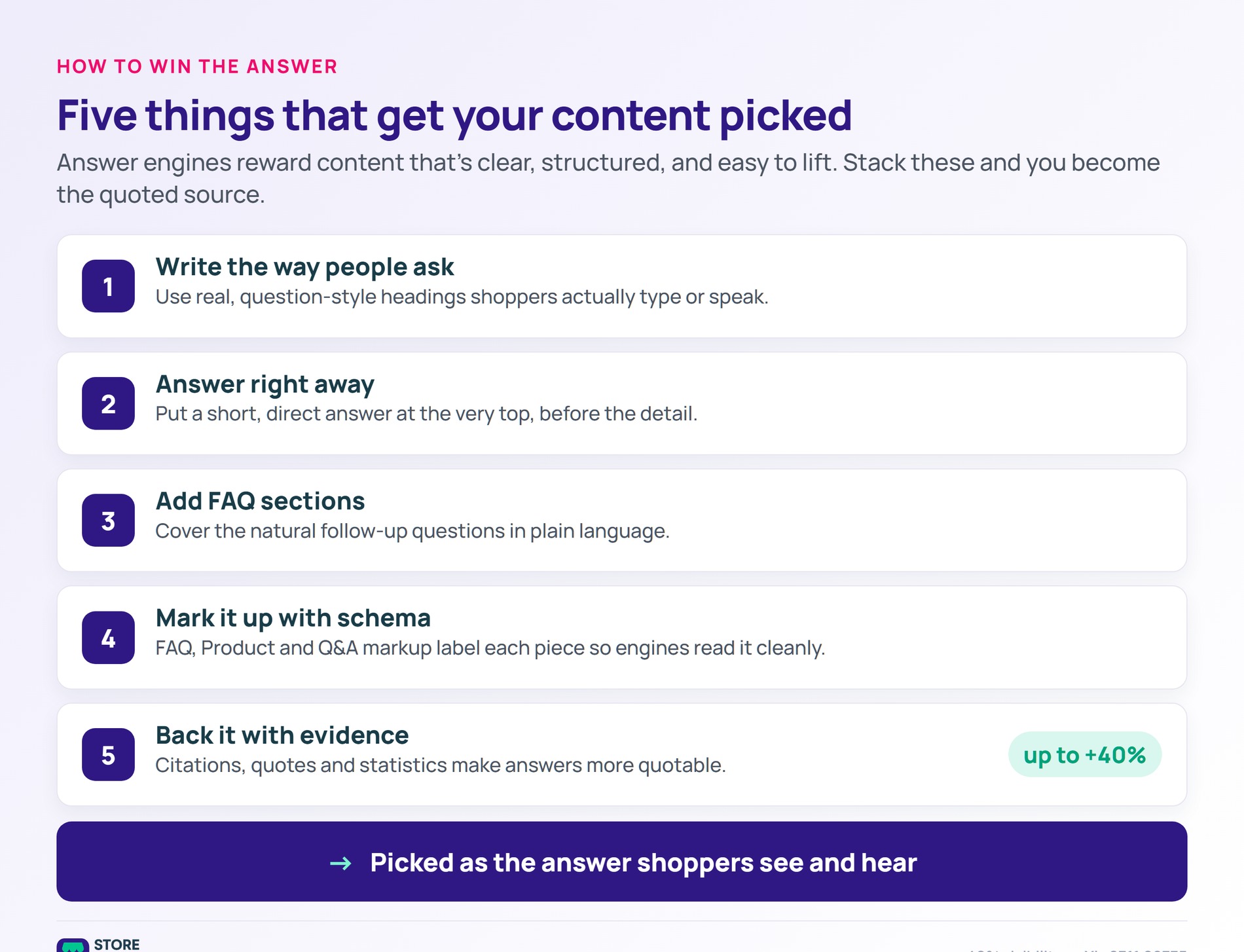
Structure does a lot of the heavy lifting. Use question-style headings, short answers up top, and FAQ sections. Add structured data so engines can read your pages with confidence.
Schema markup is your label maker here. FAQ schema, Product schema, and Q&A markup tag each piece of content by what it is. As a result, an engine can lift your answer without guessing.
Evidence helps too. Research on optimizing content for AI answer engines tested simple tweaks. Adding citations, quotes, and statistics can lift visibility by up to 40%. Clear, sourced answers get picked more often.
Engines do not just read words; they map relationships between things. They want to know who you are and what you sell. This is where entity and authority signals matter.
An entity is simply a known thing: a brand, a product, a person. The clearer your entity, the easier you are to quote. Consistent names, descriptions, and Organization schema all help.
Authority is the trust behind the entity. Reviews, citations, and links from respected sites all build it. A file like LLMs.txt can also guide AI crawlers to your best content.
AEO success looks different from old rank tracking. You are watching for inclusion, not just position. The first question is simple: are engines quoting you at all?
Track how often your brand appears in AI answers and snippets. Watch referral traffic from AI tools in your analytics. Also note which questions trigger your content as the response.
Then connect that visibility to outcomes. Are answer-driven visitors buying, signing up, or returning? Those signals tell you AEO is doing real work, not just earning vanity mentions.
Set a baseline before you start, then check it monthly. Note which queries you win and which rivals own. Over time, that map shows where to focus your next round of answers.
Shoppers increasingly expect answers, not homework. ChatGPT alone reached 100 million users in about two months, the fastest-growing internet app at the time. That habit is reshaping how people research purchases.
The money is following the behavior. Traffic to U.S. retail sites from generative AI sources jumped 1,200% in early 2025 versus mid-2024. Stores that own the answer capture that interest first.
Ignoring AEO means risking invisibility. If an answer engine never names your store, the shopper may never learn you exist. AEO is how you stay in the conversation.
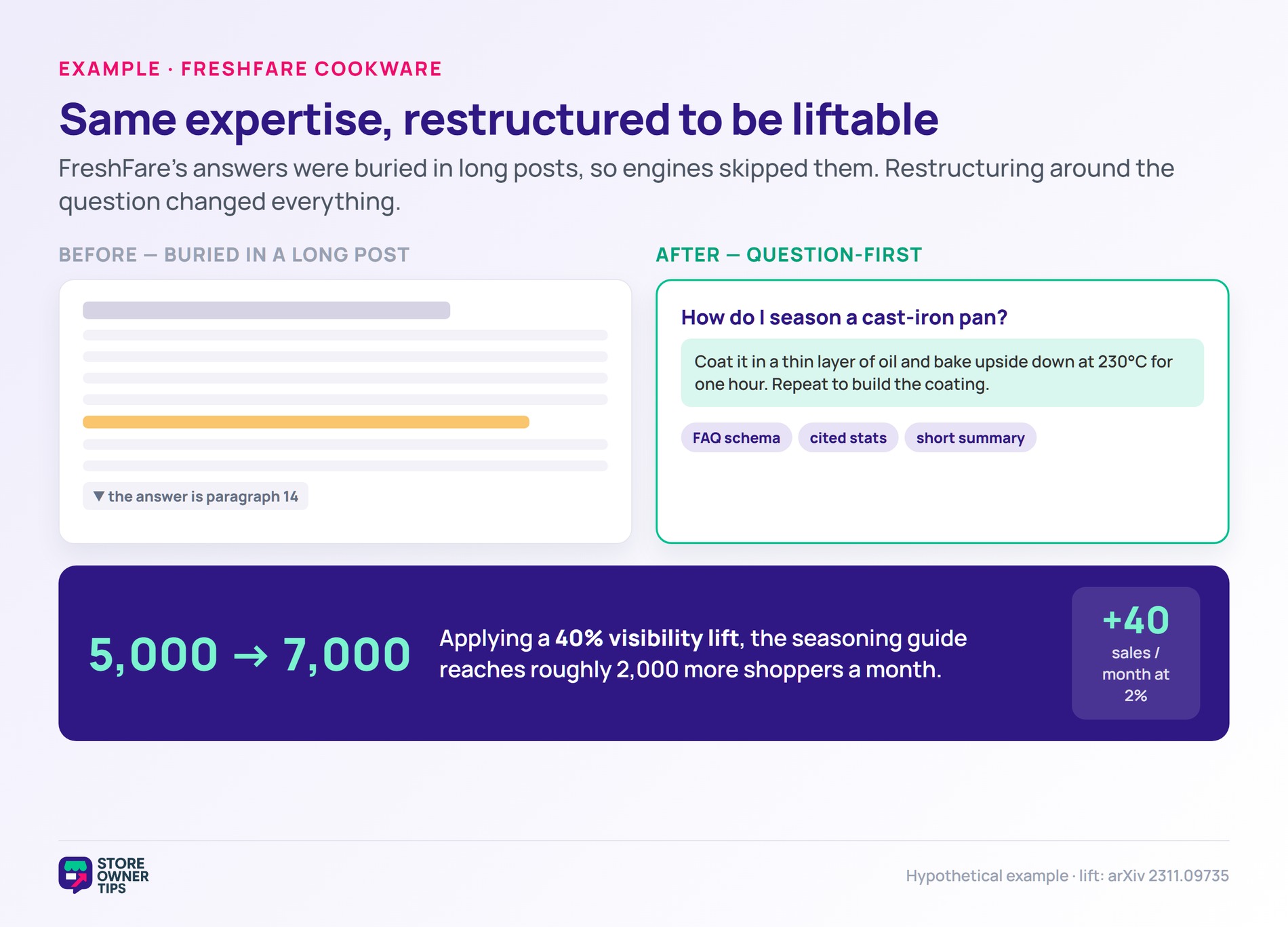
Imagine a WooCommerce store called FreshFare that sells cookware. Many shoppers ask things like how to season a cast-iron pan. FreshFare has great answers buried deep in long blog posts.
Because the answers are hard to extract, engines skip them. So FreshFare restructures its content for AEO. Each guide now opens with a clear question and a short, direct answer.
The team adds FAQ schema and concise summaries at the top. They cite trusted sources and include simple stats. This mirrors the methods shown to lift answer-engine visibility by up to 40%.
Say FreshFare’s seasoning guide drew 5,000 visits a month before. Applying that 40% visibility lift, it could reach roughly 7,000 answer-driven views. That is 2,000 extra shoppers meeting the brand monthly.
Now layer in the wider shift in shopper behavior. With AI retail traffic up 1,200%, that answer channel keeps growing. Early movers compound their lead as more shoppers ask engines first.
Even a slice of those views converts. If 2% of the extra 2,000 visitors buy, that is 40 new sales monthly. At a modest pan price, the restructuring pays for itself fast.
Soon, FreshFare’s answer starts appearing as the snippet. Voice assistants begin reading its seasoning steps aloud. The brand becomes the trusted source for that question.
Shoppers who hear the answer often check out the store next. They arrive already trusting FreshFare’s expertise. That trust makes them far more likely to buy a pan.
The content did not change in quality, only in clarity. By answering plainly and early, FreshFare became the chosen answer. Visibility followed naturally.
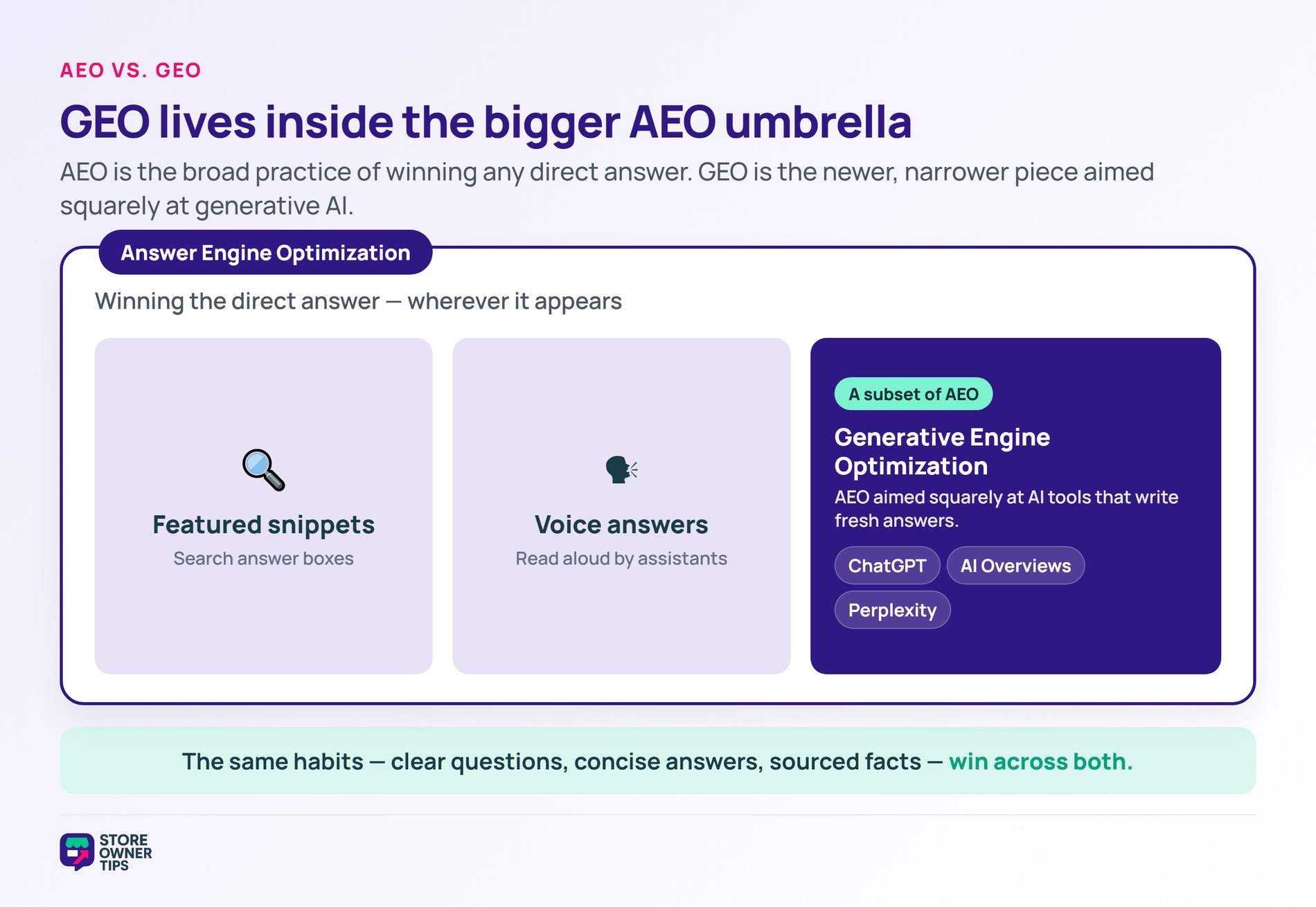
The two terms overlap and are often used together. AEO is the broad umbrella for winning any direct answer. That includes snippets, voice replies, and AI chat responses.
Generative engine optimization is the newer, narrower piece. It focuses on AI tools that write fresh answers, like ChatGPT and AI Overviews. You can think of it as AEO aimed squarely at generative AI.
In practice, the same habits serve both. Clear questions, concise answers, sourced facts, and clean structure win across the board. Doing AEO well sets you up for generative engines too.
The line keeps blurring as engines blend formats. A single query can now trigger a snippet and an AI summary. So treating them as one strategy is the practical move.
SEO works to rank your page among many links. AEO works to make your content the single answer shown. SEO earns the click, while AEO earns the spotlight. The best content strategy now does both.
Write content around real questions shoppers ask. Put a short, clear answer right at the top. Add FAQ sections and structured data to help engines read you. Keep facts accurate and current so you stay trustworthy.
Yes, and small stores can move quickly. Answering niche questions clearly is something big brands often neglect. That gives focused stores a real chance to own specific answers. The effort compounds as more engines pull your content.
Yes, the same clear answers feed shopping assistants too. When tools handle conversational checkout, they pull from trusted, well-structured sources. Clean product data and schema make your store easy to recommend. So AEO work pays off across both search and buying flows.
Answer engine optimization is about becoming the response shoppers see and hear, not just a link they might click. As snippets, voice, and AI answers take over, owning the answer is the new front page. Write clear, structured, well-sourced answers, and your store can be the one engines choose to quote.
Copyright © StoreOwnerTips.com. All Rights Reserved.
