Weekly ecommerce tips, deals & news.
Christmas in July is a mid-year promotion that borrows holiday themes, gift messaging, and festive discounts in July. For WooCommerce stores, it works as a summer sales boost and an early test of holiday demand. In the Southern Hemisphere, it’s also a real winter celebration with Christmas-style dinners and decorations.
Christmas in July works by running a holiday-themed sale in midsummer, with festive branding, gift bundles, and a limited-time discount. The store sets a window, picks the products, and promotes the event through email, social media, and the storefront. Shoppers get an early bargain on gifts. The store gets summer revenue plus useful data before the real holiday rush.
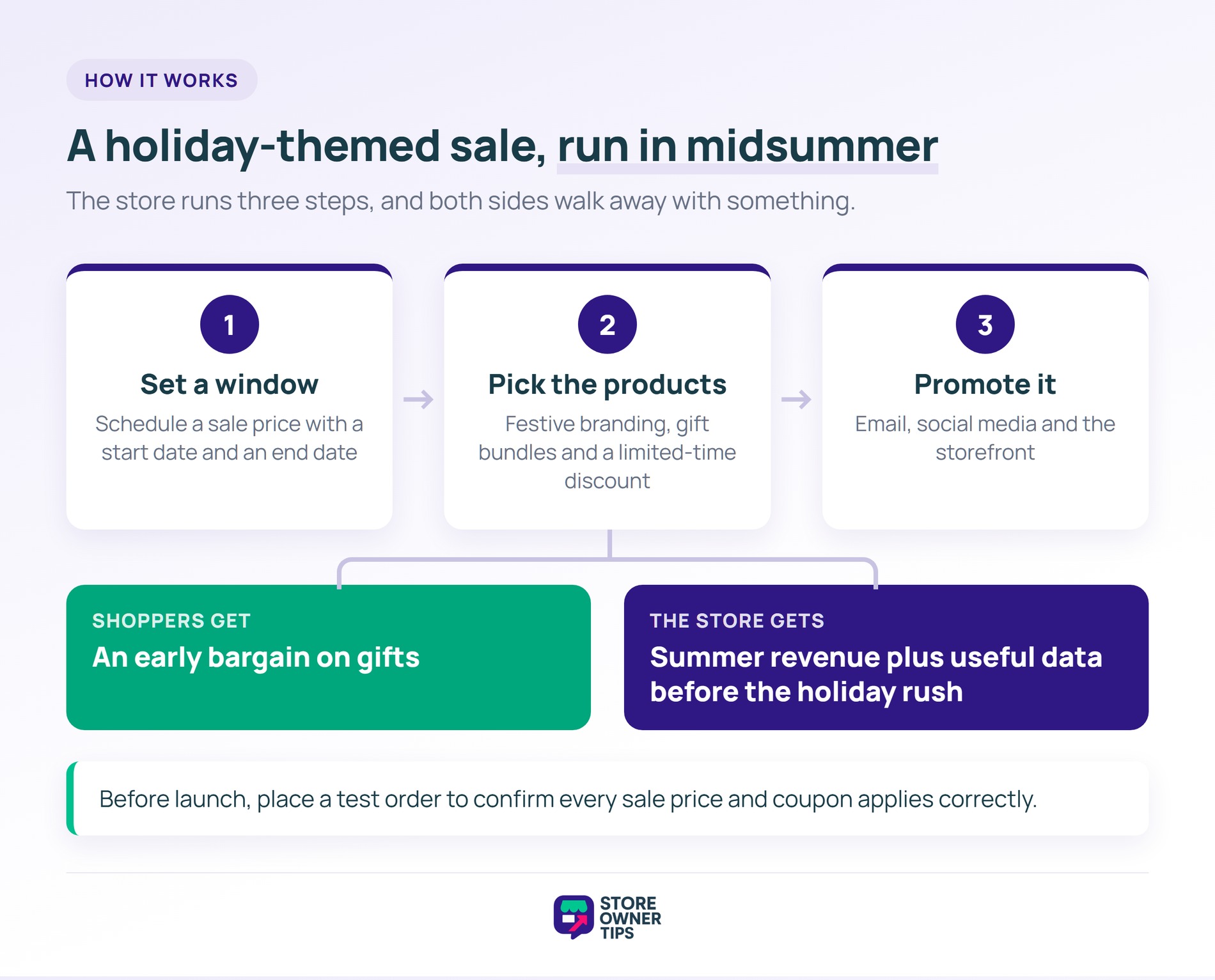
WooCommerce has the core tools for a Christmas in July sale built in. You can schedule a sale price on any product with a start date and an end date. Think of it like a timer on an oven: you set it once, and it switches off right on time. Coupons can also be limited by expiry date, product, category, or usage count.
Before launch, place a test order to confirm every sale price and coupon applies correctly. A broken discount on day one wastes a big part of a short window. Check that the end date is right too, or the sale may keep running into August.
Most stores pair the discount with a themed collection page and a festive banner. Some add gift bundles or a free gift above a set cart value. Others skip the week-long format and run a 48-hour flash sale instead. For more angles, these Christmas promotion ideas work just as well in July as they do in December.
Christmas in July taps into novelty and early planning. A snowflake banner in the middle of summer is unexpected, and unexpected things get noticed. The holiday theme also reminds shoppers that gift season is coming. That nudge is often enough to get planners buying early.
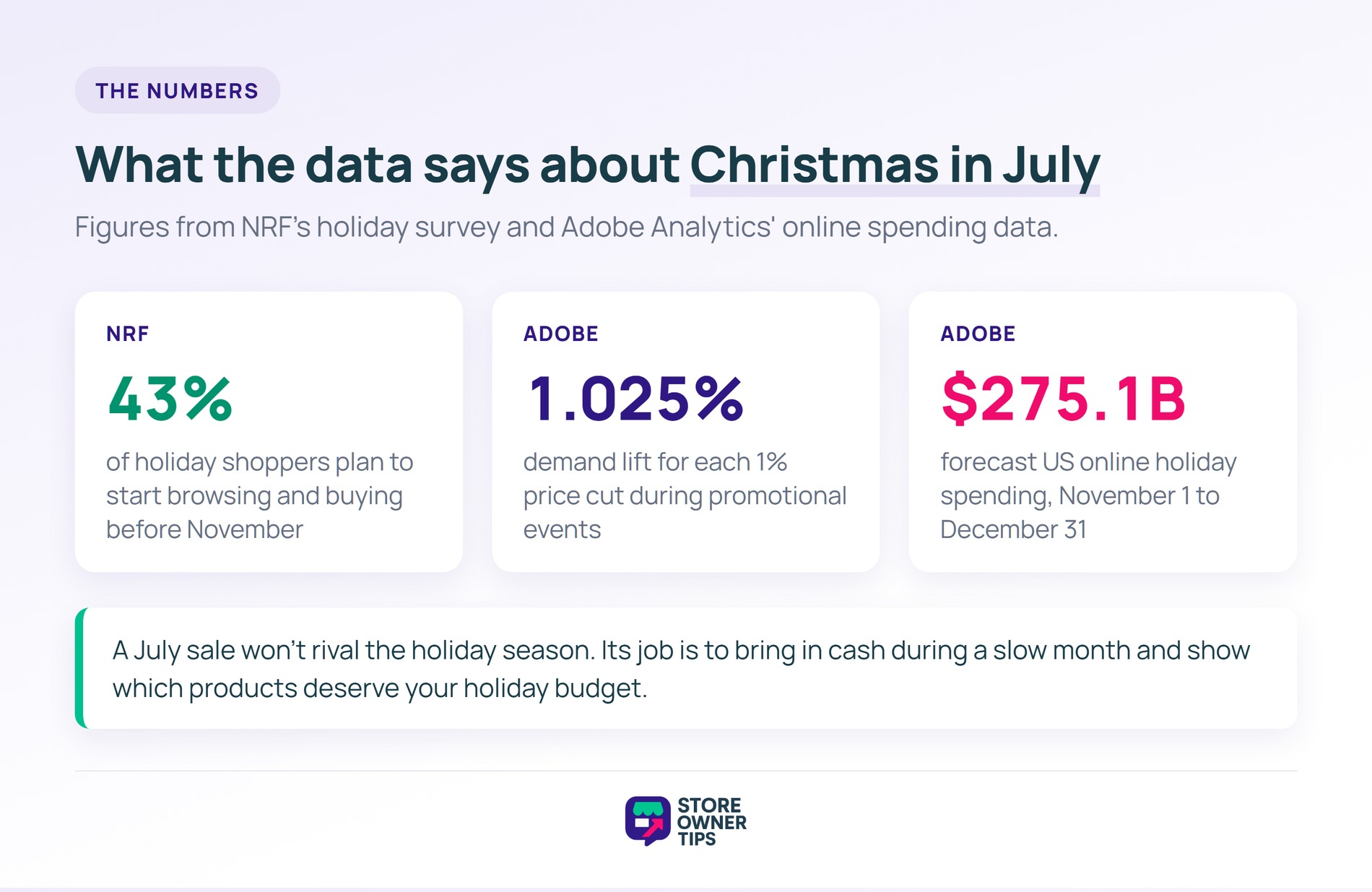
That planner group is real and sizable. In NRF’s holiday survey, 43% of holiday shoppers plan to start browsing and buying before November. Half of those early starters told NRF they do it to spread out their holiday budgets. A July sale gives that group a head start, months before the Black Friday and Cyber Monday noise begins.
In Australia and New Zealand, Christmas in July is more than a marketing hook. December falls in summer there, so roast dinners, warm drinks, and cozy decorations clash with the heat. July is midwinter, so many people hold Christmas-style dinners and parties then instead. For stores selling into those countries, the event is a genuine seasonal moment.
The hemisphere changes how you pitch Christmas in July. Northern Hemisphere shoppers respond to “get ahead on gifts” messaging. By contrast, Southern Hemisphere shoppers respond to winter comfort: candles, blankets, baking supplies, and party gear. If you sell in both regions, consider running two versions of the same campaign.
The numbers behind Christmas in July come from Adobe Analytics’ online spending data and NRF’s shopper surveys. Adobe tracked promotional events like Prime Day, Memorial Day, and Labor Day. During those events, each 1% price cut lifted demand by 1.025% compared to the year before. In plain terms, shoppers respond to off-season discounts, but only roughly in proportion to the cut.
The main holiday season is still far bigger. Adobe forecasts U.S. online holiday spending will reach $275.1 billion from November 1 to December 31. A July sale won’t rival that number. Its job is to bring in cash during a slow month and show which products deserve your holiday budget.
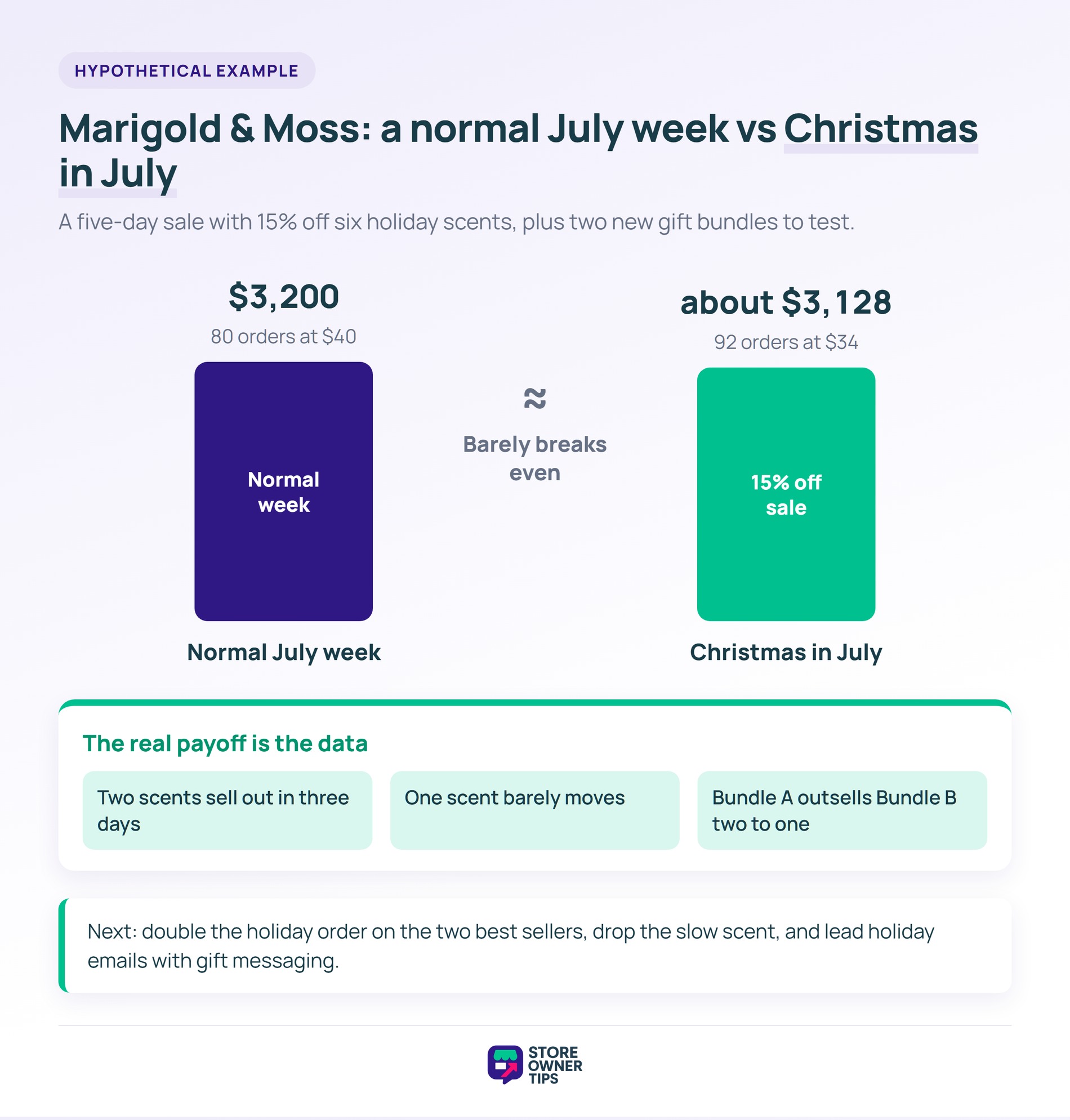
Christmas in July looks like a short, themed sale that doubles as a holiday rehearsal. Here’s a hypothetical example. Imagine Marigold & Moss, a small WooCommerce store selling hand-poured candles and botanical gift sets.
Marigold & Moss runs a five-day Christmas in July sale with 15% off its six holiday scents. It also launches two new gift bundles to see which one shoppers prefer. The store emails its list, adds a festive banner, and marks the event on its holiday sales calendar. In a normal July week, the store gets about 80 orders at a $40 average order value.
Using Adobe’s promo-event ratio as a rough guide, a 15% price cut lifts demand by about 15%. That’s around 92 orders instead of 80. At $34 per order after the discount, revenue lands near $3,128. A normal week brings in $3,200, so the discount alone barely breaks even.
The real payoff for Marigold & Moss is the data. Two scents sell out in three days, while one barely moves. Bundle A outsells Bundle B two to one. The store now knows what to stock deep for December before placing its seasonal inventory orders.
With the July results in hand, Marigold & Moss doubles its holiday order on the two best sellers. It drops the slow scent from the holiday lineup entirely. Next, it plans an early access sale in November for the customers who bought in July. Those buyers already showed interest, so they’re the warmest audience for the next holiday push.
Marigold & Moss also reviews which emails drove the most clicks. The subject line that mentioned gifts beat the one that mentioned savings. That tells the store to lead with gift messaging in its holiday emails. A five-day test in July has now shaped the whole December plan.
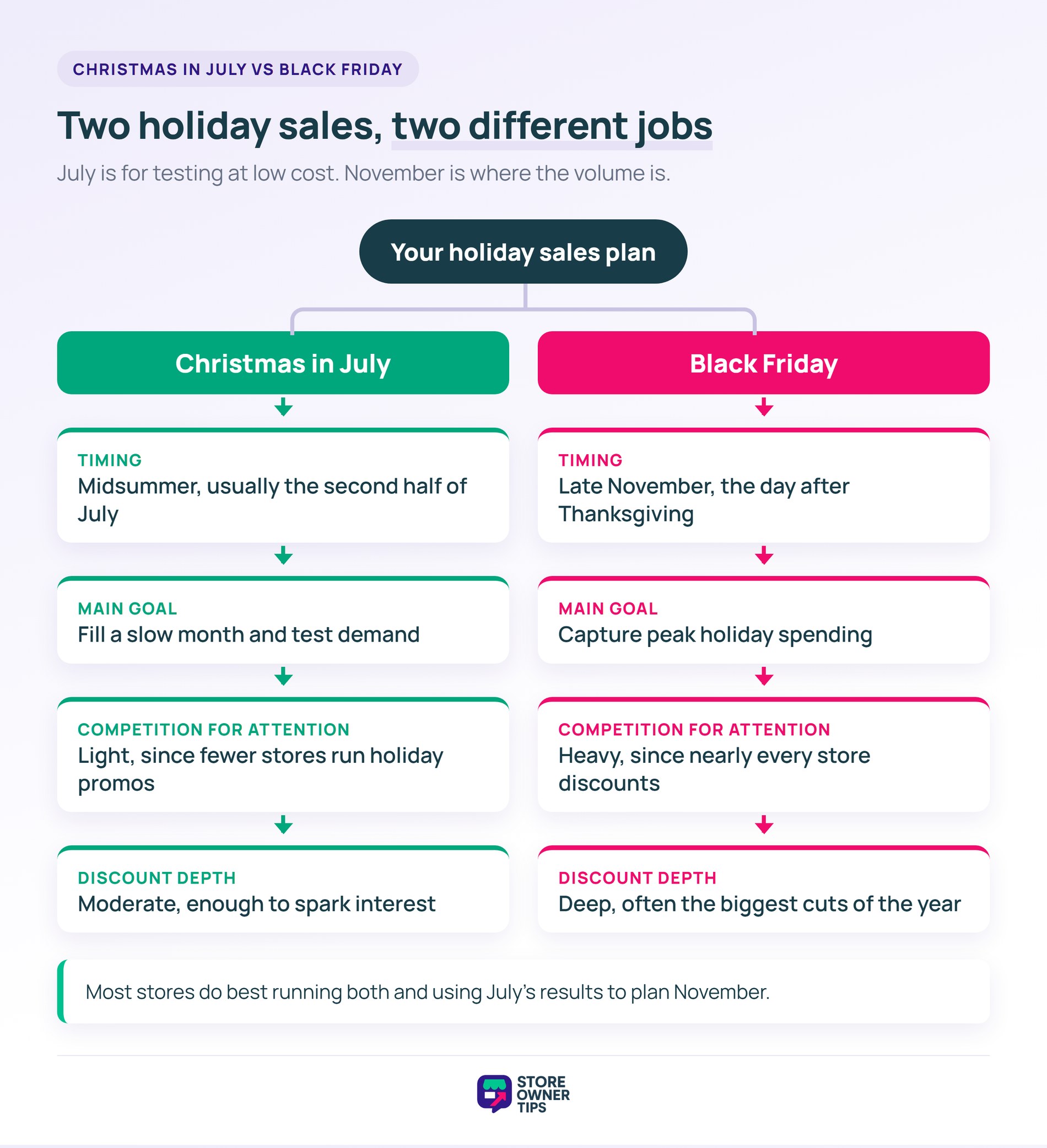
| What you’re comparing | Christmas in July | Black Friday |
|---|---|---|
| Timing | Midsummer, usually the second half of July | Late November, the day after Thanksgiving |
| Main goal | Fill a slow month and test demand | Capture peak holiday spending |
| Competition for attention | Light, since fewer stores run holiday promos | Heavy, since nearly every store discounts |
| Discount depth | Moderate, enough to spark interest | Deep, often the biggest cuts of the year |
Christmas in July is the better fit for testing products and engaging your list at low cost. Black Friday is where the volume is, but competition for attention peaks too. Most stores do best running both and using July’s results to plan November. Plenty of holiday marketing tactics, like gift guides and countdown emails, work in both windows.
Christmas in July has no official date. Many stores run it in late July. Some anchor it to July 25, exactly five months before Christmas. Pick a window that doesn’t clash with your other summer promotions or big marketplace sales.
Australians celebrate Christmas in July because December falls in their summer. July is midwinter, so a hot roast dinner, warm drinks, and cozy decorations feel more natural then. Restaurants and households often host Christmas-style dinners during the month. For stores selling there, winter comfort products tend to fit the mood best.
Christmas in July is worth it for most small stores if you treat it as a test, not a windfall. A modest discount on a few products can bring in summer sales and show which items deserve holiday stock. It also gives you a good reason to email your list in a quiet month. Keep it short, and set a clear end date so the sale doesn’t feel permanent.
Christmas in July matters because it turns a slow summer month into both a sales opportunity and a holiday rehearsal. The products, bundles, and messages that work in July tell you where to focus when the real season arrives. As a result, stores that test early walk into November with better stock, warmer customers, and fewer guesses.
Copyright © StoreOwnerTips.com. All Rights Reserved.
