Weekly ecommerce tips, deals & news.
A long-tail keyword is a longer, more specific search phrase that fewer people use. Instead of coffee maker, it is best pour over coffee maker for small kitchens. Each one draws less traffic, but the searcher knows exactly what they want. That focus makes long-tail keywords easier to rank for and far more likely to convert.
A long-tail keyword is a detailed, multi-word search phrase. It narrows a broad topic down to a specific need. The name comes from the long tail of a search-demand graph.
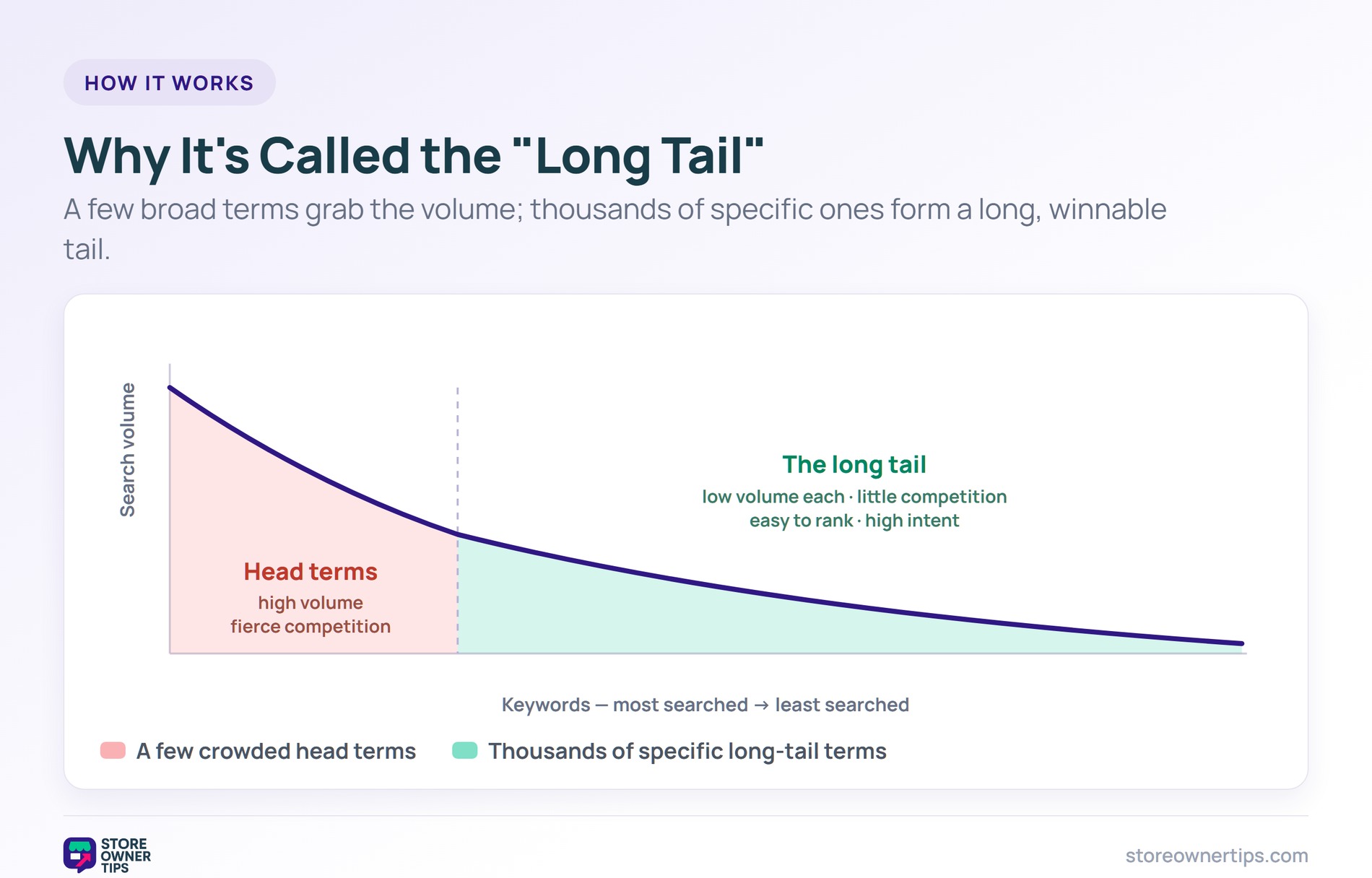
Think of head terms as a crowded ocean. Everyone fishes there, so the competition is fierce. A long-tail keyword is a small, quiet pond instead.
In that pond, you may be the only angler. Fewer rivals means a far better chance to rank. The catch is smaller, but it is almost all yours.
The longer the phrase, the clearer the need. Each extra word filters out casual browsers. What remains is a focused, ready searcher.
Long-tail searches signal a clear, specific goal. A detailed query usually means a decided shopper. They know what they want and often want it now.
That sharp focus lifts conversion sharply. A vague term draws browsers, while a specific one draws buyers. High purchase intent rides along with detail.
So long-tail traffic is smaller but better. Fewer visitors arrive, yet more of them buy. Quality beats quantity on these terms.
Long-tail buyers also compare less. They have already narrowed their choice. So they reach checkout faster.
Start with a broad head term you care about. Then add detail like size, use, or audience. Each added word creates a new long-tail option.
Search tools surface these phrases for you. Autocomplete and people-also-ask boxes are goldmines. They show the exact wording real searchers use.
Your own data helps as well. Site search and analytics reveal real queries. Reading customer intent in those terms guides your content.
Competitor pages reveal terms too. See which phrases they rank for. Gaps in their coverage become your openings.
Head terms are brutally competitive. Giant brands dominate the broad phrases. A small store rarely cracks the top spots.
Long-tail terms thin out that competition. Few sites target such specific phrases. So your page has a real shot at the top.
That matters because top spots win the clicks. The first organic result earns about 27.6% of clicks. The top three together take over 54%.
So long-tail is the small store’s best path to page one. You skip the fight you cannot win. Instead, you win the fights nobody else enters.
One long-tail term brings only a trickle. But you can target hundreds of them. Together they add up to a flood.
This builds durable organic traffic over time. Organic search already drives 53.3% of all site traffic. Long-tail pages claim a steady share of it.
The traffic is also stable and defensible. Rivals seldom bother chasing tiny terms. So your hard-won rankings tend to stick.
Each ranking page is a small, lasting asset. Build enough, and they compound. The stream grows wider every month.
Long-tail terms shine in the AI era. People now ask AI assistants full, specific questions. Those questions are long-tail by nature.
A page built for a precise query fits the answer. The engine pulls your exact match into its reply. That visibility is the goal of generative engine optimization.
So long-tail work pays off twice over. It wins classic rankings and AI citations alike. Specific content travels well across both.
A long-tail term often makes a perfect blog topic. The phrase itself hints at the title. You answer one specific question in depth.
Cluster related questions into a single guide. One strong page can rank for many phrases. That beats many thin pages every time.
Use the searcher’s own words throughout. Mirror the phrasing in headings and answers. Natural wording signals a precise match.
Answer the question fast and up high. Searchers want the answer, not a long intro. A quick win keeps them on the page.
Not every long-tail term needs its own page. Many are just variations of one question. Group those onto a single, thorough page.
A page on best pans for small kitchens can cover several phrasings. It ranks for the whole cluster at once. That concentrates your authority.
Save separate pages for truly distinct needs. A gas-stove pan differs from an apartment pan. When unsure, start grouped and split later.
Review your groups as you grow. A cluster may split as it gains depth. Let real performance guide the structure.
The first mistake is ignoring them for big terms. Chasing only head terms leaves easy wins on the table. Long-tail is where a small store competes.
Another trap is one page per tiny term. That splits your effort into thin slivers. Group related long-tail terms onto one strong page.
A third slip is forcing keywords unnaturally. Stuffing exact phrases reads badly and hurts trust. Write for people, then weave terms in smoothly.
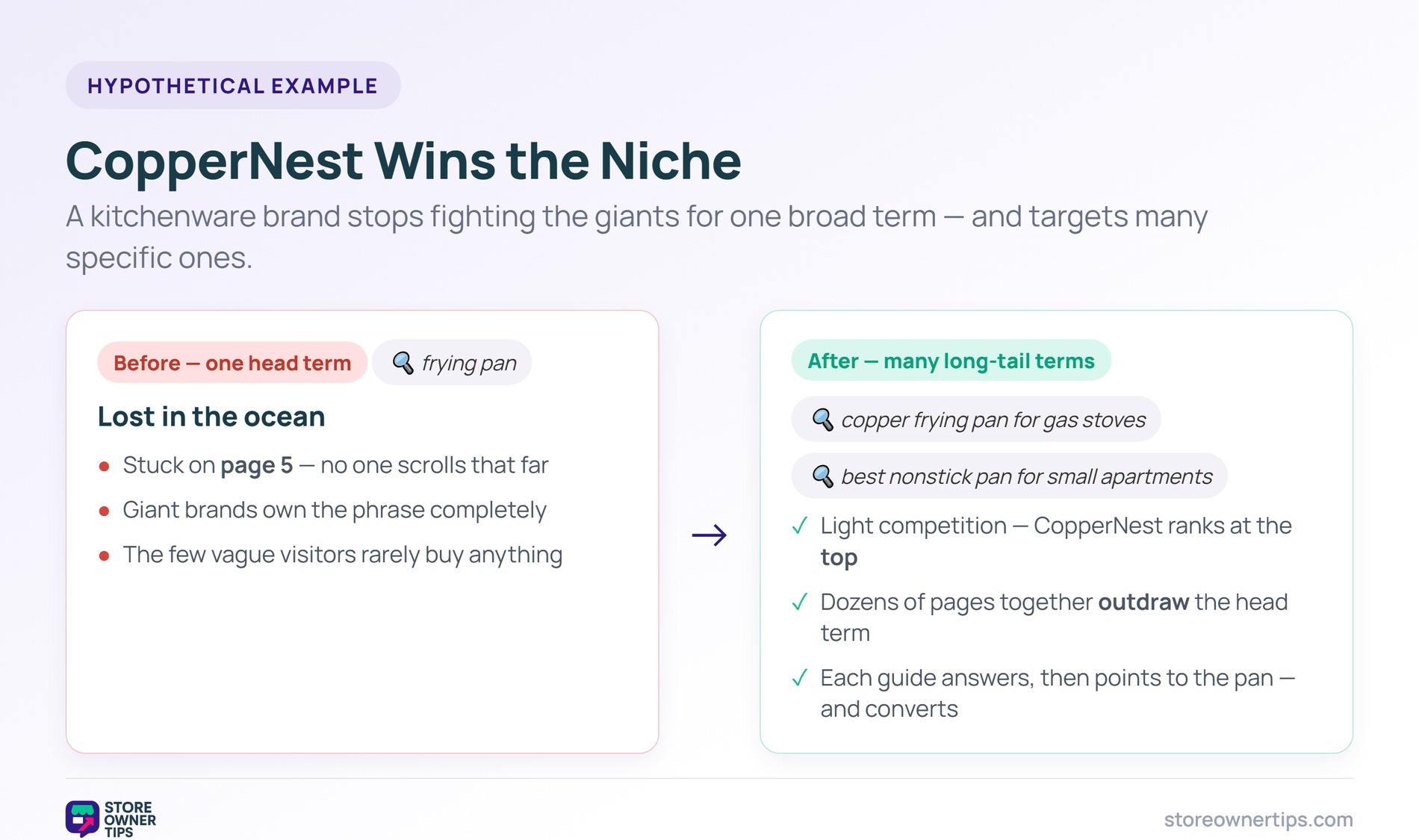
Imagine a kitchenware brand called CopperNest on WooCommerce. It chases the head term frying pan with little luck. Huge brands own that phrase completely.
CopperNest ranks on page five for frying pan. No one ever scrolls that far. The broad term sends it zero real traffic.
Its pages also draw vague, browsing visitors. Those few clicks rarely turn into sales. The store is fishing in the crowded ocean.
CopperNest also wastes its small budget on the head term. Every effort there is lost to giants. The strategy is doomed from the start.
CopperNest targets specific long-tail phrases instead. It builds pages for copper frying pan for gas stoves. Another targets best nonstick pan for small apartments.
Each phrase has light competition and clear intent. CopperNest climbs to the top for several of them. The pages match exactly what those buyers want.
Dozens of long-tail pages each pull a trickle. Together they outdraw the failed head term. The traffic also converts far better than before.
CopperNest also turns each guide into a small funnel. The guide answers the question, then points to the pan. Learning flows naturally into buying.
CopperNest now owns a niche the giants ignore. Its rankings hold steady month after month. The lesson is clear: long-tail terms are where small stores win.
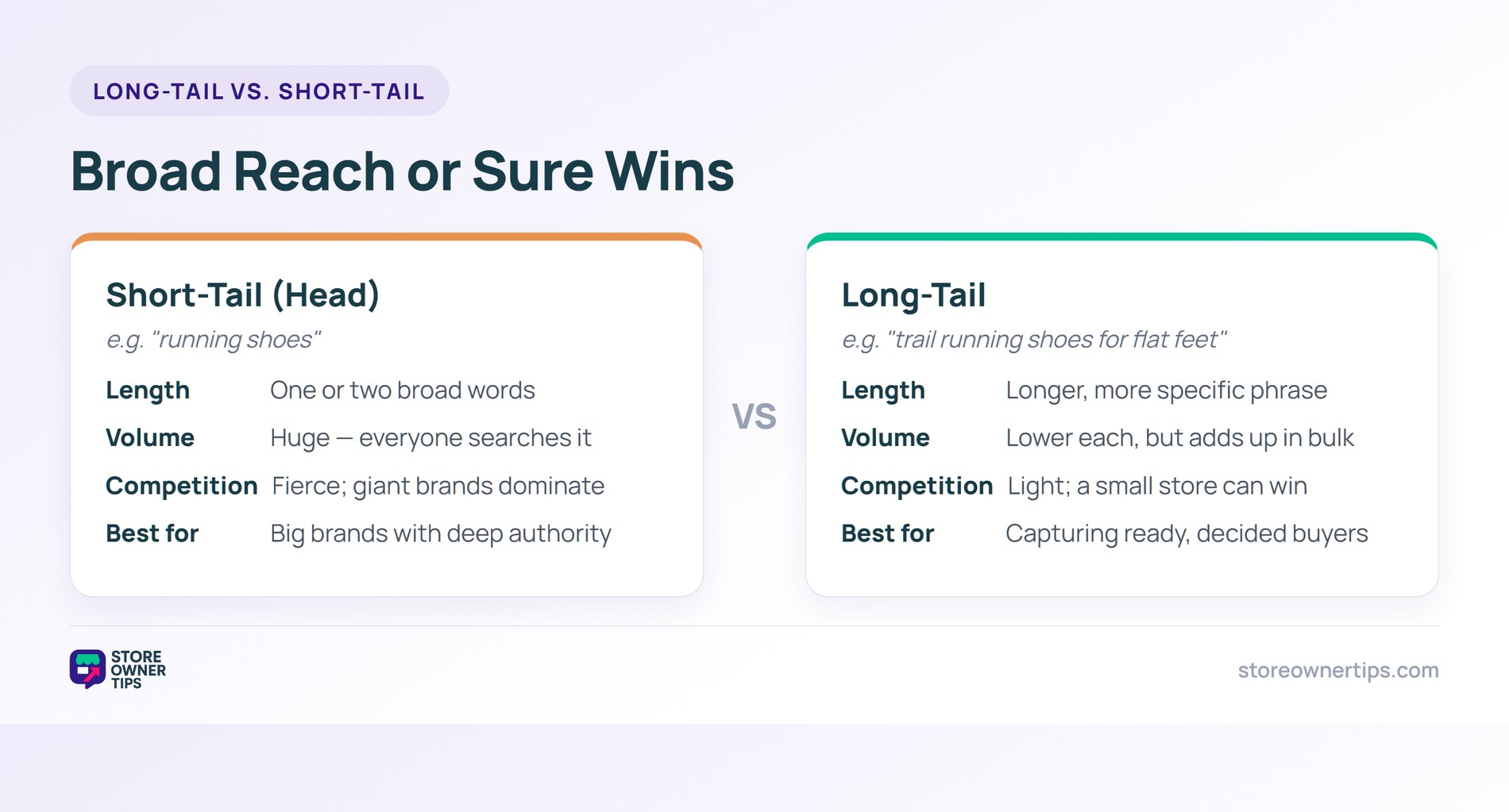
Short-tail, or head, keywords are broad and brief. Think one or two words like running shoes. They have huge volume but fierce competition.
Long-tail keywords are longer and more specific. Think trail running shoes for flat feet. They have less volume but far less competition.
Head terms bring big traffic if you can rank. Few small stores ever can. Long-tail terms bring smaller, surer wins.
The smart play uses both together. Head terms set your broad topics. Long-tail terms capture the buyers within them.
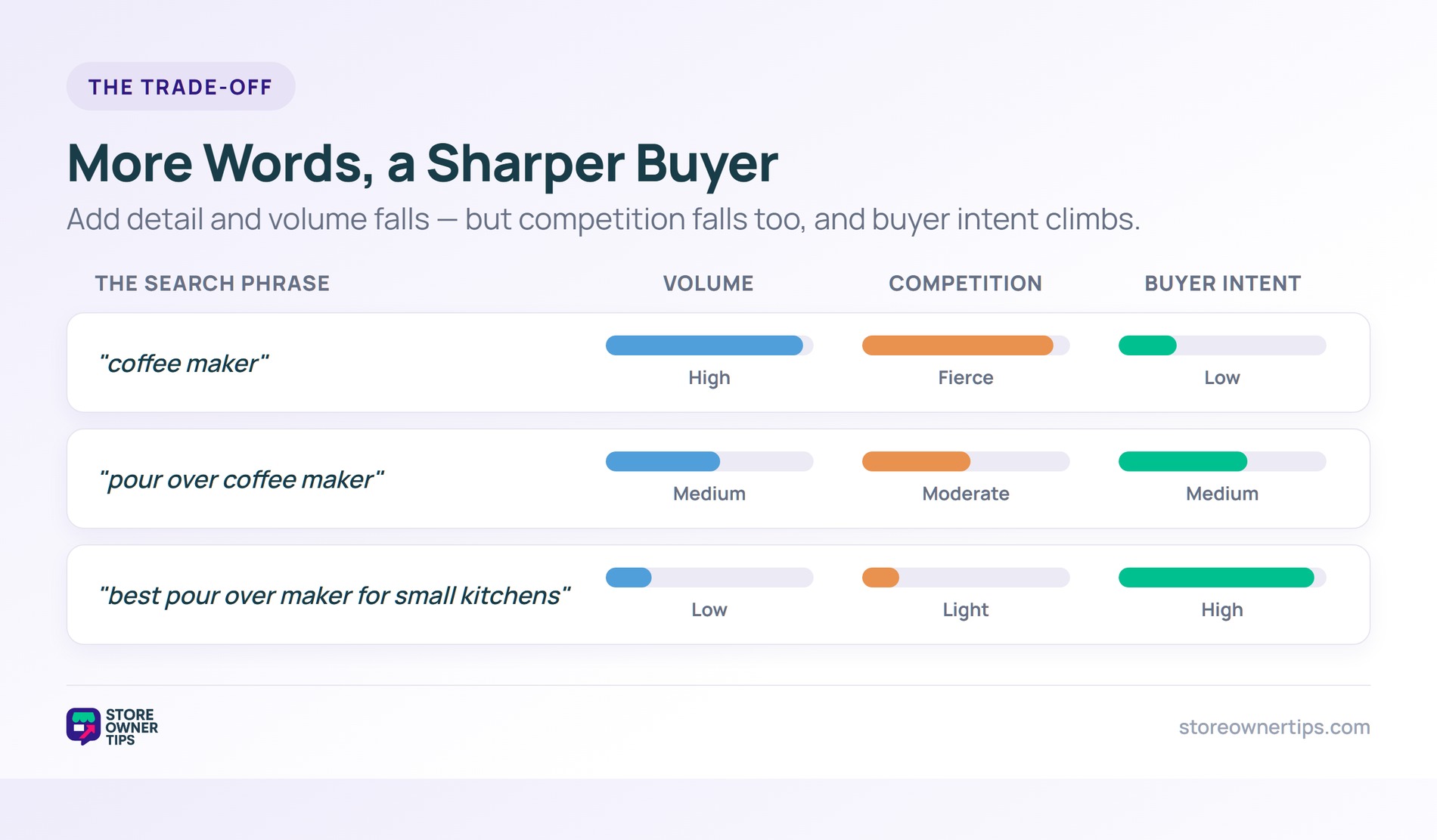
Coffee maker is a head term, broad and competitive. Best pour over coffee maker for small kitchens is long-tail. The extra words are what make it winnable.
They are better for most small stores. They rank more easily and convert more often. Head terms suit big brands with deep authority.
There is no fixed number, so aim wide. Each term adds a little traffic. Let your niche guide how wide to go.
A long-tail keyword is a specific, lower-volume phrase that is easy to rank for and quick to convert. Targeting many of them lets a small store win where it cannot beat the giants. Build focused pages around real long-tail searches, and the traffic compounds into reliable sales. Win the small terms, and the totals get big.
Copyright © StoreOwnerTips.com. All Rights Reserved.
