Weekly ecommerce tips, deals & news.
Organic traffic is the stream of visitors who reach your store through unpaid search results. They type a query into Google, see your page in the natural listings, and click. You pay nothing for that click, unlike an ad. It is the reward for content and SEO that match what people search for.
Organic traffic is any visit that comes from a free search listing. A shopper searches a term, sees your page, and clicks through. No ad spend is involved in that visit.
Think of it like word-of-mouth foot traffic for a shop. People find you because you earned a good reputation. A paid ad, by contrast, is like renting a billboard.
This makes organic traffic both valuable and durable. Once a page ranks well, it can draw visitors for years. The traffic keeps flowing long after the work is done.
Organic traffic spans every search engine, not just Google. Bing, and increasingly AI assistants, all send free clicks. But Google still drives the lion’s share.
Organic traffic starts with a search engine ranking. Google scans the web and ranks pages for each query. Your goal is to rank high for terms your buyers use.
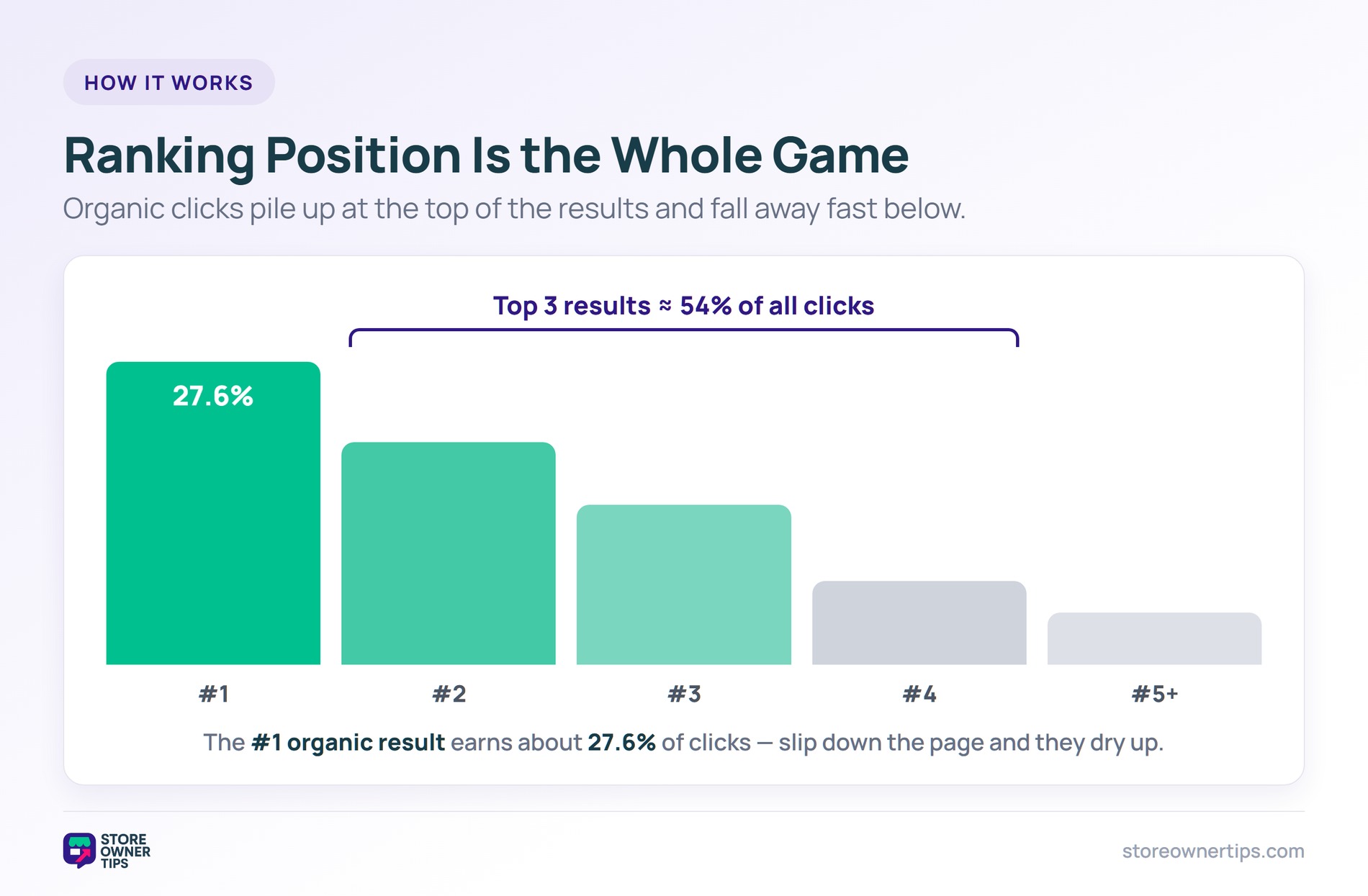
The higher you rank, the more clicks you earn. The top organic result gets about 27.6% of clicks. The top three together capture over 54%.
So ranking is the whole game for organic traffic. Good content earns the rank, and the rank earns the clicks. Slip down the page, and the clicks dry up fast.
Organic search is the single largest traffic source online. It drives 53.3% of all site traffic on average. No other channel comes close.
That traffic is also high-intent and low-cost. A searcher is actively looking for what you sell. You capture them without paying for each click.
It compounds over time, unlike paid ads. An ad stops the moment you stop paying. A ranking page keeps earning clicks for free.
Organic traffic also feeds your other channels. A reader today can become an email subscriber tomorrow. One free visit can start a long relationship.
On WooCommerce, organic traffic flows to your product and category pages. Each one can rank for the terms buyers search. Strong on-page SEO is what lifts them.
An SEO plugin makes this practical to manage. Tools like AIOSEO or Yoast handle titles, meta, and sitemaps. They guide each page toward better rankings.
Content beyond products matters too. Guides and blog posts draw top-of-funnel searchers. Those readers can become buyers later.
Category pages are quiet SEO powerhouses. They can rank for broad, high-volume terms. So give them real descriptions, not blank lists.
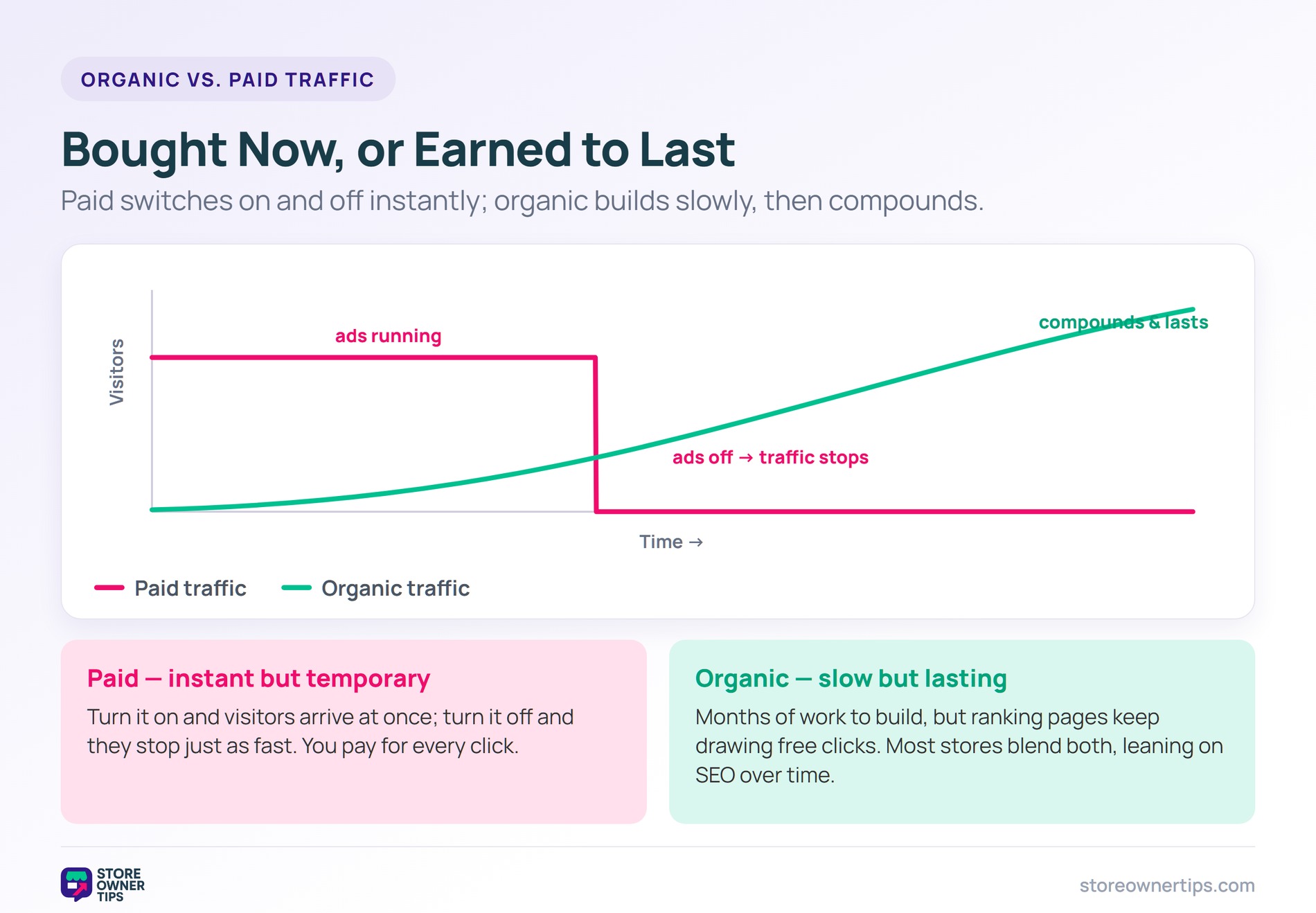
Growth starts with the right keywords. Find terms your buyers actually search for. Then build pages that answer them fully.
Quality content is the engine of organic growth. Helpful, clear pages earn rankings and links. Thin or copied pages go nowhere.
Technical health matters as much as content. A fast, crawlable, mobile-friendly site ranks better. Fix the basics before chasing fancy tactics.
Earning links from other sites helps too. Each quality link is a vote of trust. More trust lifts your rankings over time.
Search is changing fast in the AI era. Engines now answer many queries directly. That shift reshapes how organic traffic flows.
A new field called generative engine optimization has emerged. It tunes content for AI answers, not just blue links. Smart stores now optimize for both.
Some searches end without a click at all. This zero-click commerce trend means visibility beyond the click. Showing up in the answer still builds your brand.
This does not kill SEO, it broadens it. The same quality signals still win. You simply earn visibility in more places now.
The best organic traffic matches the searcher’s intent. A page must answer what the customer intent behind the query really is. A mismatch means high bounce and no sales.
A how-to searcher wants a guide, not a product page. A ready buyer wants a clear product page. Match the page to the intent behind the query.
Get this right, and rankings and conversions both rise. Get it wrong, and even top rankings waste clicks. Intent is the bridge between traffic and sales.
You cannot grow what you do not measure. A free analytics tool shows your organic visits. It separates them from paid and social sources.
Watch which pages pull the most organic clicks. Those winners reveal what is working. You can then create more of the same.
Track rankings and clicks together over time. Rising ranks should lift your traffic. A gap between them points to a weak title or snippet.
LeafLore also tracks which guides rank best. It doubles down on the winning topics. The traffic curve keeps bending upward.
The first mistake is chasing volume over intent. High-traffic terms mean little if they do not convert. Target searches that match what you sell.
Another trap is ignoring technical SEO. A slow or broken site buries good content. Crawl errors quietly cap your traffic.
A third slip is expecting instant results. Organic growth takes months to build. Quitting early wastes the work already done.
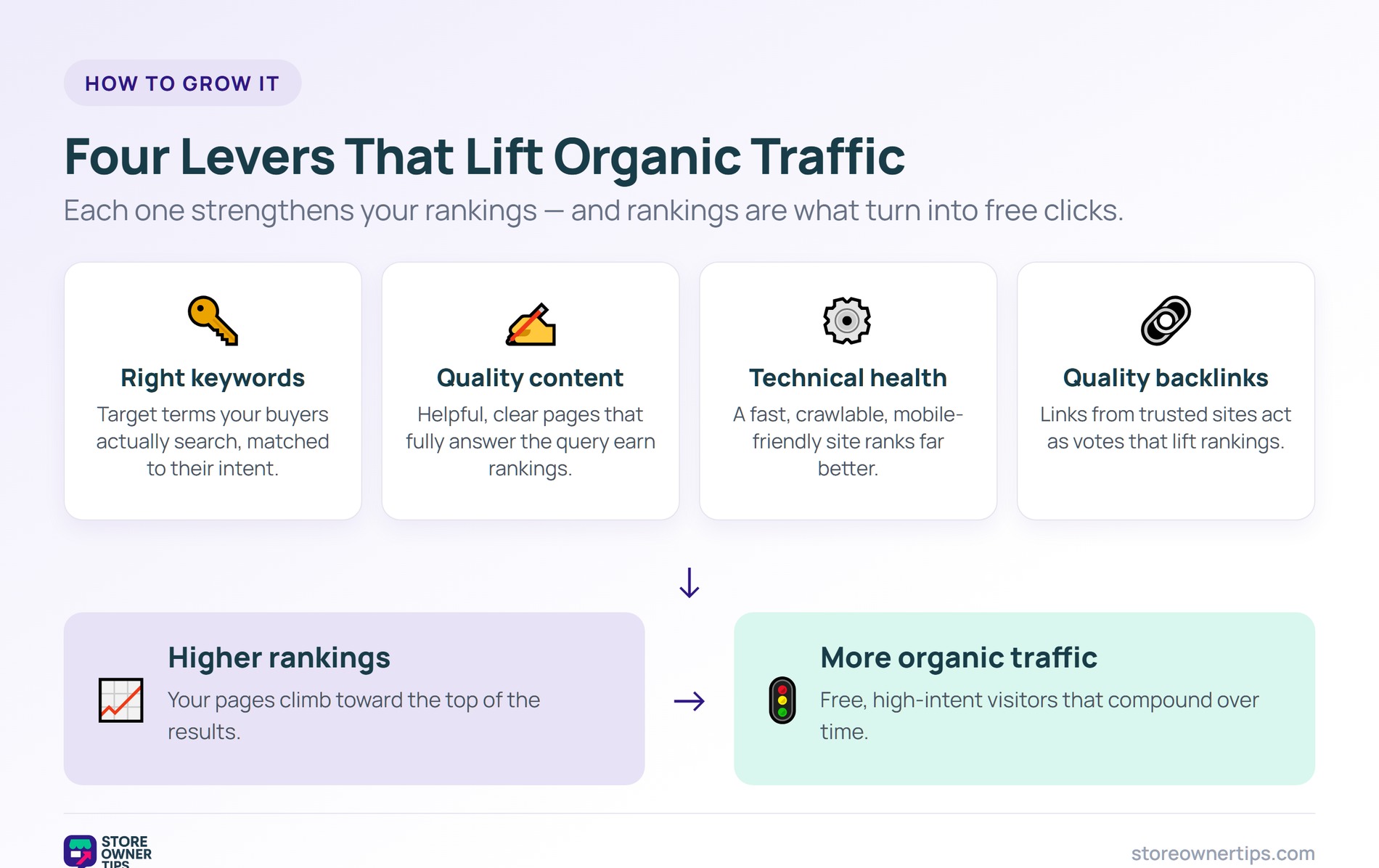
Imagine a tea brand called LeafLore on WooCommerce. It relies entirely on paid ads for sales. Every visit costs money, and the spend keeps rising.
When LeafLore pauses its ads, traffic vanishes overnight. The store has no free, lasting source of visitors. Rising ad costs squeeze its already thin margins.
It also ranks nowhere for tea-related searches. Eager searchers find competitors instead. LeafLore is invisible in the largest channel online.
LeafLore also has no idea which terms buyers use. It guesses at content and misses the mark. Real keyword data would change that.
LeafLore builds helpful guides on brewing and tea types. It optimizes product pages for real search terms. An SEO plugin handles the on-page basics.
Over a few months, pages start to rank. Searchers find LeafLore without any ad spend. The free traffic begins to flow in steadily.
Organic visits climb month after month. LeafLore leans less on costly ads. Its cost per sale drops as free traffic grows.
The ranking pages keep working around the clock. New buyers arrive while the owner sleeps. The lesson is clear: organic traffic compounds into lasting growth.
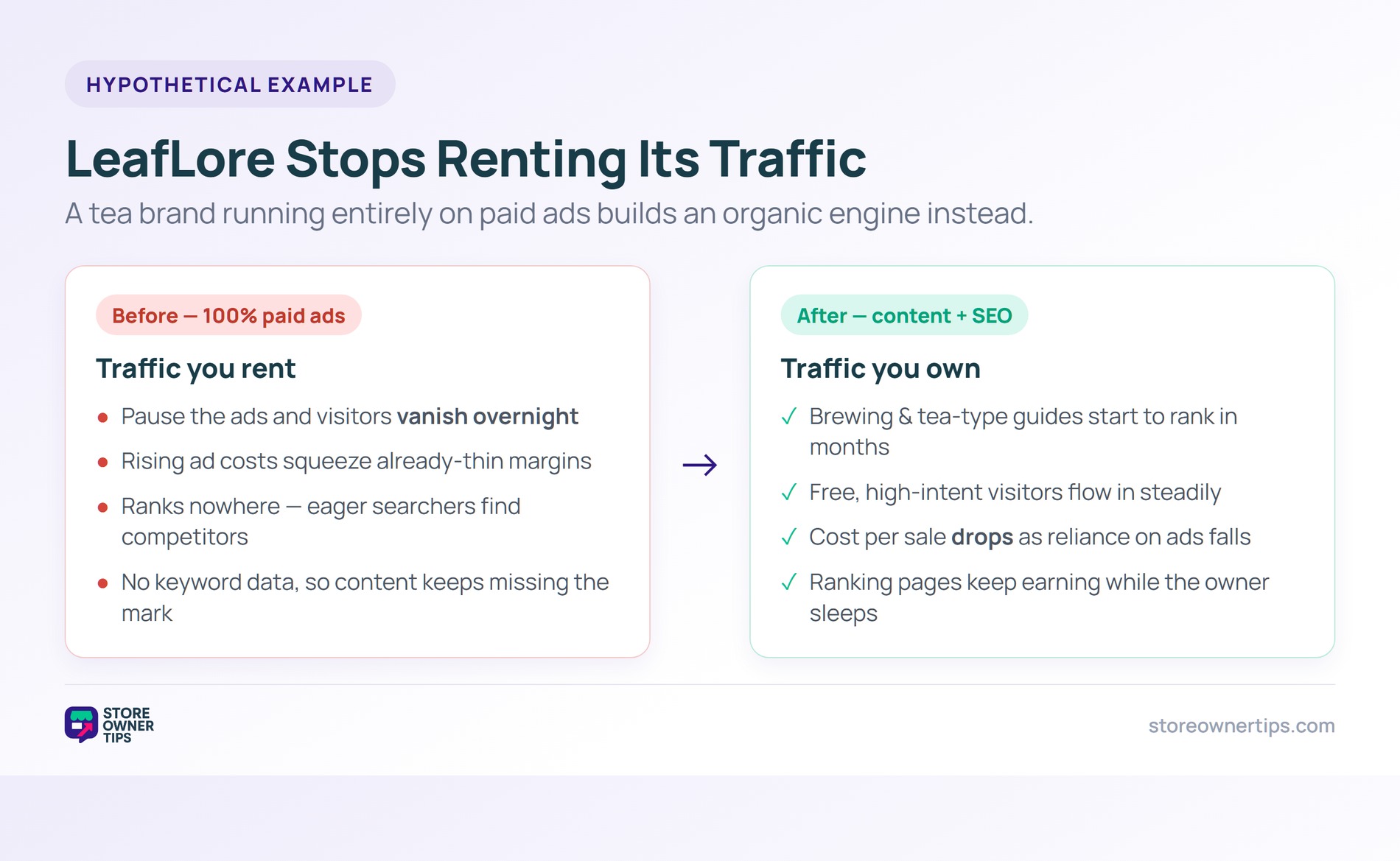
Organic and paid traffic both bring visitors from search. The difference is how you earn them. Organic is free and earned, while paid is bought per click.
Paid traffic is instant but temporary. Turn on an ad, and visitors arrive at once. Turn it off, and they stop just as fast.
Organic traffic is slow but lasting. It takes months of work to build. Yet it keeps flowing without ongoing cost.
Most stores blend both for balance. Ads cover the short term while SEO builds. Over time, organic lowers the reliance on paid.
It usually takes several months to see real gains. New pages need time to rank. Consistent content and SEO speed the climb.
Each serves a different purpose, and most stores use both. Organic is cheaper and lasts longer. The smartest play is to grow both together.
Use a free analytics tool to see your traffic sources. It separates organic search from paid and social. Check it monthly to spot trends early.
Organic traffic is the free, high-intent stream of visitors that good SEO earns you. It is the largest channel online and compounds for years once you rank. Invest in helpful content and a healthy site, and it becomes your most durable growth engine. Treat it as an asset you build, not a bill you pay.
Copyright © StoreOwnerTips.com. All Rights Reserved.
