Weekly ecommerce tips, deals & news.
A qualified lead is a potential buyer who has been carefully evaluated and shows a strong, mathematically proven chance of making a purchase. Instead of just being anyone who visits your website, these leads match your ideal customer profile and have taken specific actions that signal they are ready to buy right now.
To truly grasp how a qualified lead works, we have to look at modern buying psychology. Today’s buyers are incredibly independent. Research shows that modern buyers complete about 70% of their purchasing process in the “shadows.” They read reviews, check out your competitors, and study your products long before they ever reach out to you.
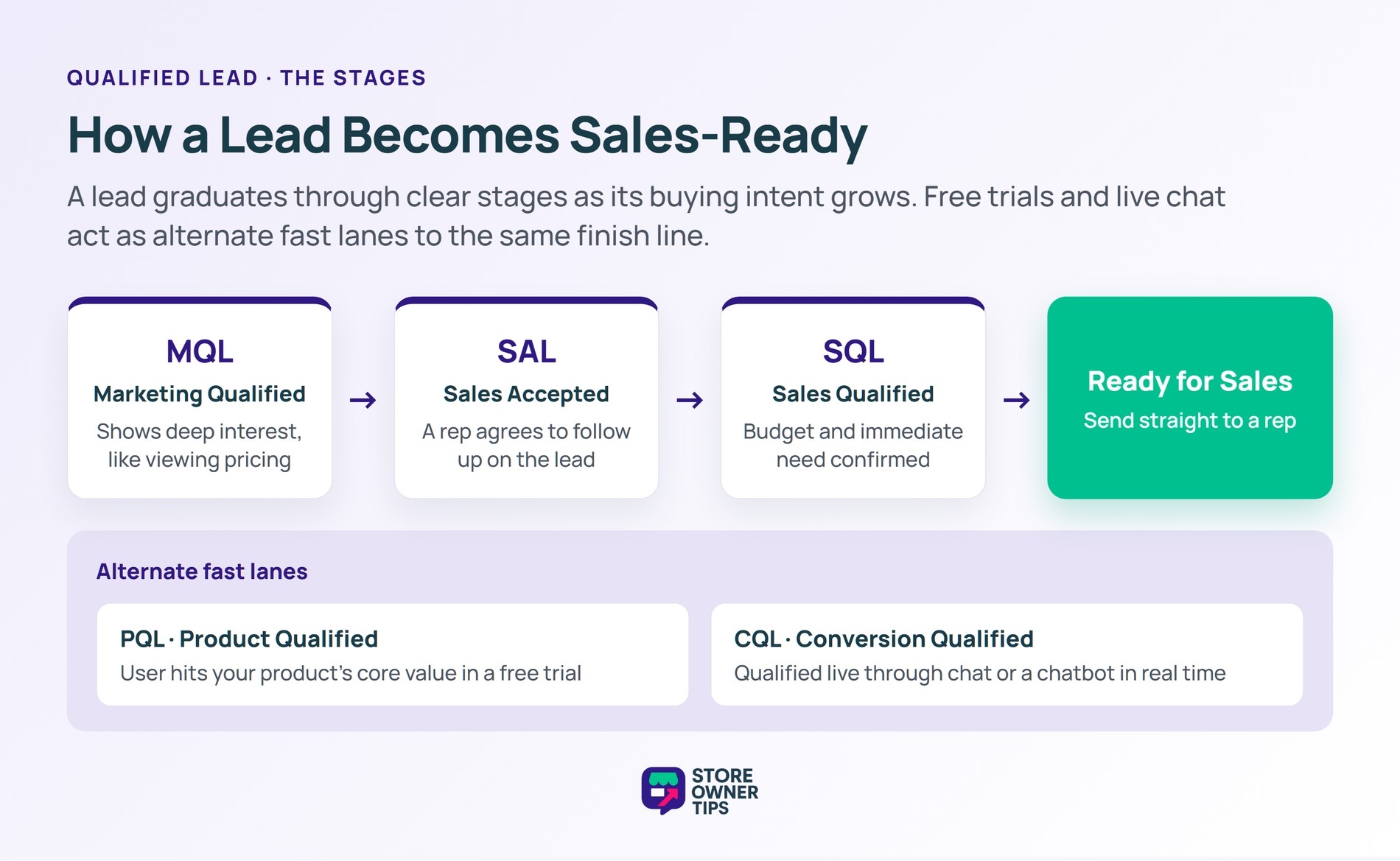
Furthermore, big purchases aren’t made by just one person anymore. For deals over $50,000, the average buying committee now includes 11.2 different people. Because of this, one single person downloading a guide doesn’t mean the whole company is ready to buy. Lead qualification takes all these scattered clues and uses math to figure out when a prospect shifts from just “learning” to “ready to buy.”
In the e-commerce world, leads are broken down into specific stages to keep things organized:
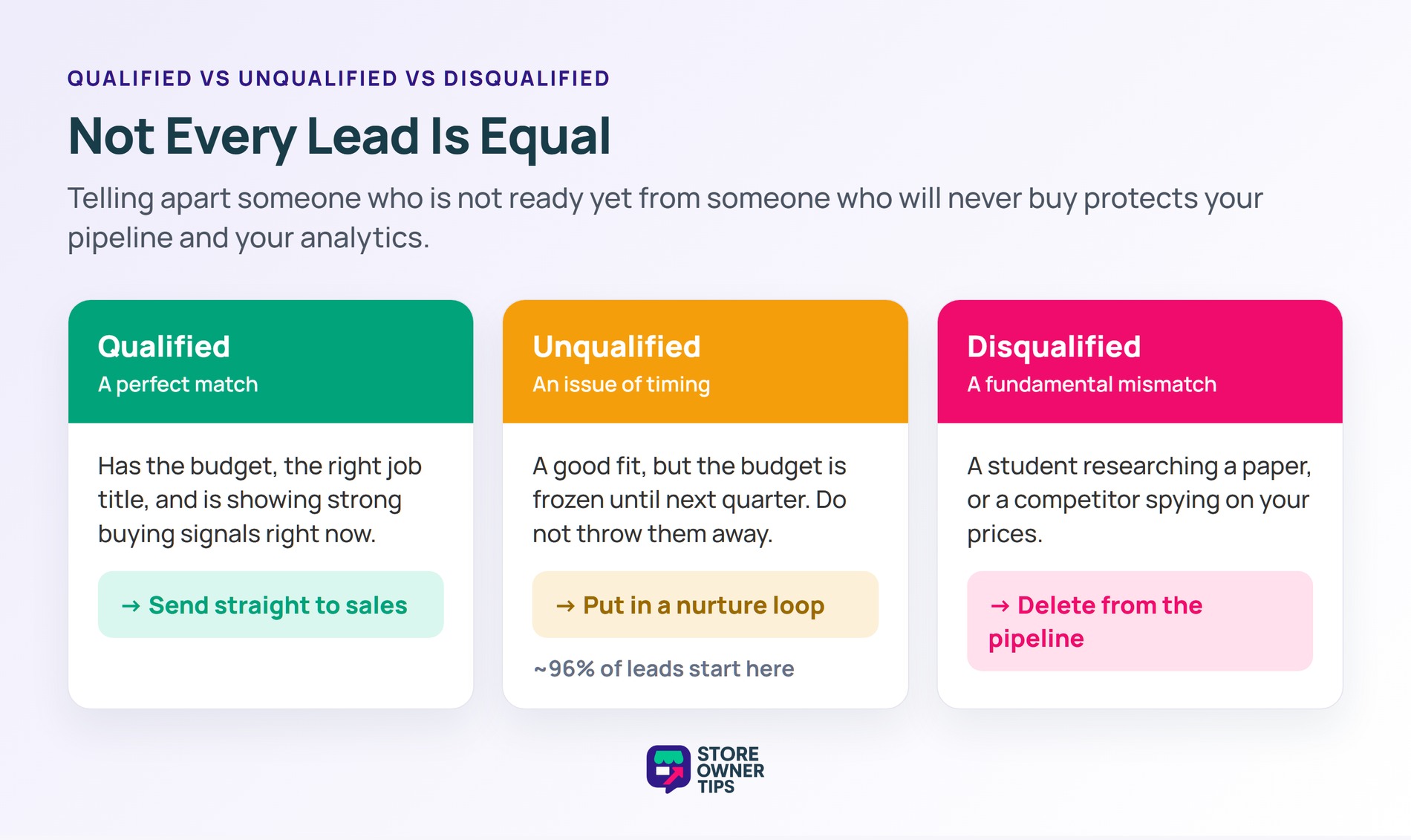
To track all of the above leads, e-commerce platforms use advanced technology. For instance, Shopify uses the Web Pixels API. Think of an API like a secure digital clipboard that quietly takes notes on what a shopper is doing without getting in their way.
It watches for actions like “product viewed” or “checkout started” and sends that data back to your system safely.
Once your store tracks this behavior, it sends the data to your Customer Relationship Management (CRM) software using a Bidirectional Data Sync. Think of this like a magically linked pair of notepads; if you write a new phone number on one notepad in your store, it instantly appears on the other notepad in your CRM.
Inside the CRM, the lead goes through a scoring engine. The system usually caps out at 100 points to keep things balanced. A lead might get +15 points for visiting a pricing page, or -10 points for visiting your careers page (since they just want a job, not your product). Once they cross a certain score limit, the system triggers a webhook. A webhook is like a digital tripwire that instantly texts your sales team the moment a lead gets hot.
Imagine a mid-sized B2B brand called “Summit Wholesale Apparel.” In the past, Summit’s lead generation strategy focused entirely on getting as many leads as possible. If someone filled out a simple email form, a sales rep immediately called them.
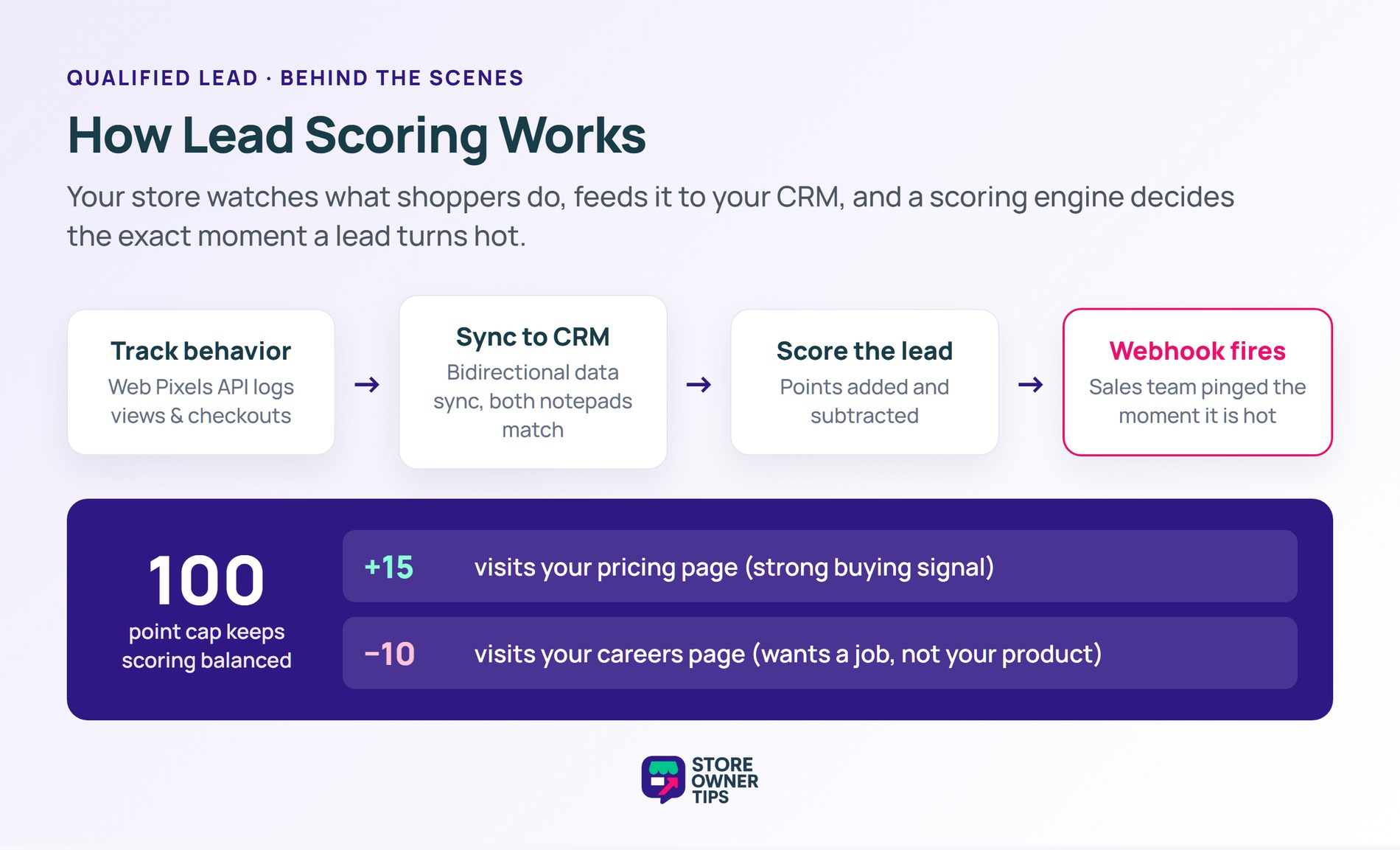
Because they required only one form field (an email address), their conversion rate sat at roughly 13.4%. But they were falling into a trap. Without any friction, their pipeline was flooded with bad leads. Their MQL-to-SQL conversion rate dropped to a dismal 9.8%. Even worse, their Cost-Per-Lead (CPL) climbed to around $397, near the bottom tier of reported industry performance. They were getting 100 inquiries, but closing less than 1 deal.
Summit decided to change its strategy and focus strictly on qualified leads. They updated their forms to include six fields, asking for things like company size and budget. Introducing this friction cut their overall form conversion rate from around 10.1% to about 4.7%. However, the leads that did come through were highly intent-driven.
Next, they layered in third-party intent data to see what buyers were doing off-site. By focusing only on these highly qualified targets, Summit’s MQL-to-SQL conversion rate jumped to 16.4%. Because these leads already had their budgets approved by their 11.2 committee members, the average contract value increased by 23%.
To make things even more efficient, Summit used AI software to handle the first outreach calls. This single change dropped their cost-per-meeting by 70%, taking it from $312 down to just $94. Overall, their win rates lifted 3.4x compared to their old, cold outreach days. Their new, disciplined CPL fell to around $84.
This turnaround completely changed their underlying financial health. In business, you measure success using the Lifetime Value to Customer Acquisition Cost ratio. To survive, you need a minimum ratio of 3:1. The math looks like this:
LTV = Avg. Monthly Recurring Revenue × Avg. Customer Lifetime × Gross Margin percentage
By stopping their sales team from wasting hours on the bottom 75% of leads, Summit’s customer acquisition costs collapsed. Their LTV stayed strong, but their costs dropped so much that their profit margins exploded. They stopped chasing volume and started building a predictable economic asset.
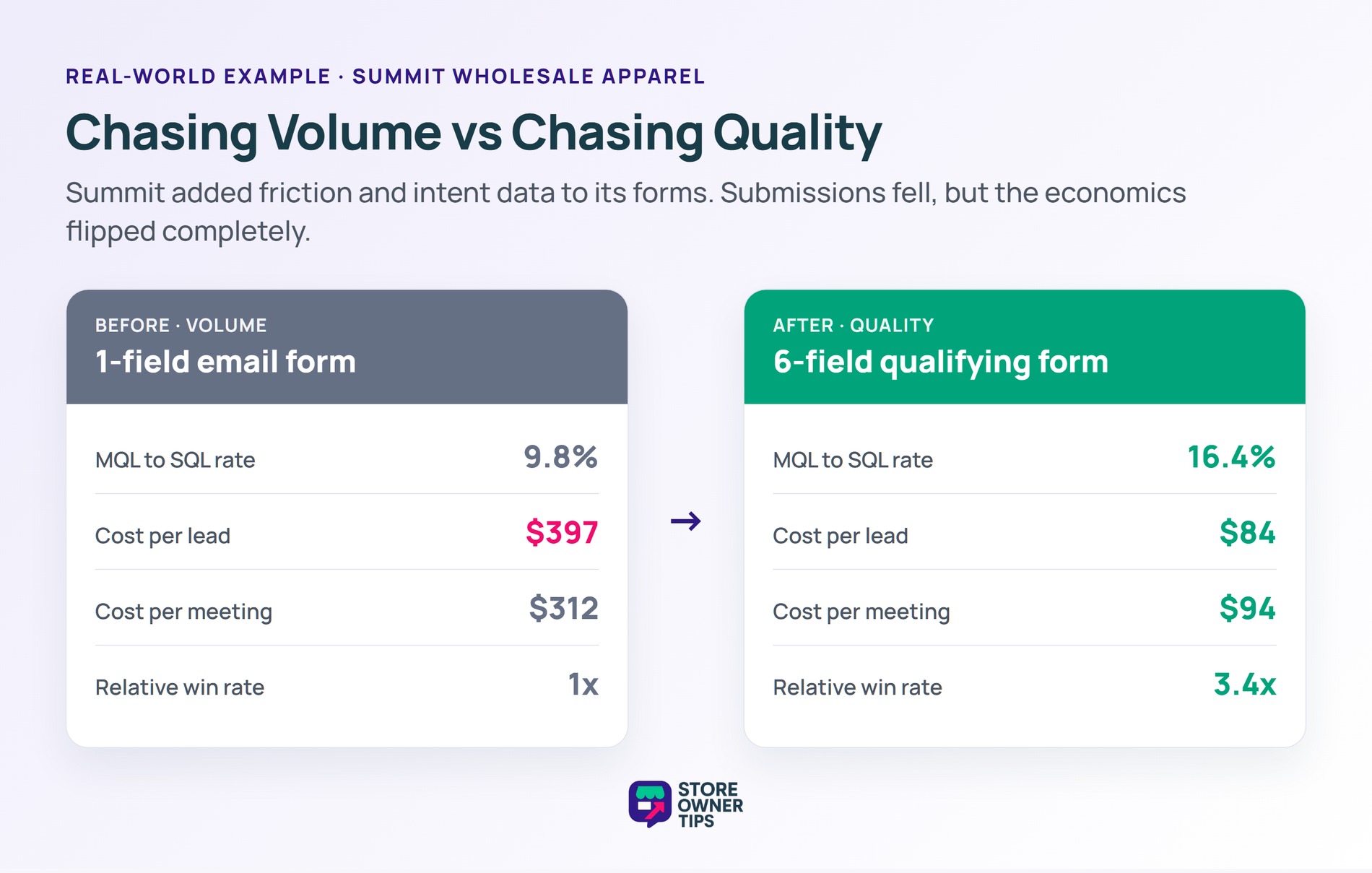
It’s vital to understand the difference between someone who isn’t ready, and someone who will never buy. Treating them the same will destroy your sales pipeline.
Building a strict lead qualification system isn’t perfect. Like any business strategy, it comes with distinct advantages and risks.
A warm lead is someone who has shown a baseline interest in your brand, like following your social media or reading your blog. A qualified lead takes that warmth and applies strict business math: Do they have the budget? Do they have the authority to buy? Warmth just means they like you; qualification means it makes economic sense for your sales team to call them.
You use automation. First, you use a lead enrichment tool. When someone enters their email, the tool automatically finds their company size, industry, and revenue, and drops it into your CRM. Second, you use a behavioral scoring engine to track their clicks on your site. Your sales team should only manually research accounts that automatically cross your required point threshold.
Your qualification net is simply set too wide. If your forms are converting beautifully but sales are flat, your form lacks friction. Try adding a specific dropdown question, like asking for their “average monthly transaction volume.” Your total submissions will drop, but the leads that do submit will be significantly more likely to buy.
A qualified lead bridges the gap between expensive marketing efforts and actual, predictable sales revenue. By using firm rules and behavioral tracking to filter out bad fits, you protect your sales team’s time and drastically lower your customer acquisition costs. Implementing a strict qualification engine is the fastest way to turn raw website traffic into a highly profitable, sustainable pipeline.
Copyright © StoreOwnerTips.com. All Rights Reserved.
