Weekly ecommerce tips, deals & news.
Kitting is the process of grouping several separate products into one ready-to-ship package with its own SKU. The kit is built in advance, before any orders come in. So when a customer buys, your team grabs one prepacked unit instead of hunting down each item. It turns a messy multi-item pick into a single, fast handoff.
Think of kitting like a meal kit you buy at the grocery store. Someone already measured the pasta, sauce, and spices and boxed them together. You grab one box and go, instead of walking five aisles. Kitting does the same thing for your warehouse shelves.
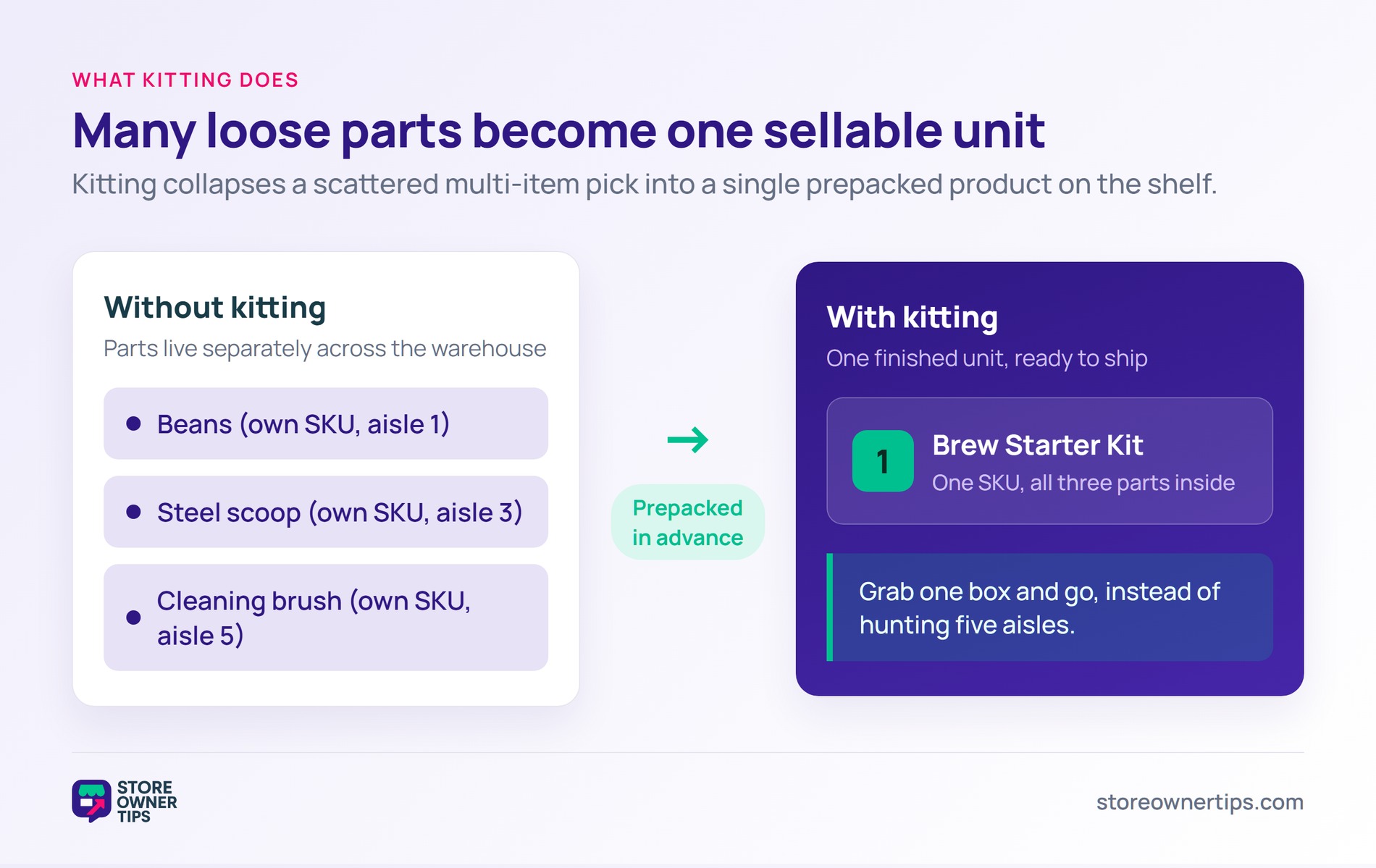
Without kitting, a “starter set” order means your team finds three or four items in different spots. Then they check each one, pack them, and hope nothing got missed. With kitting, all of that work happens once, up front. After that, the kit lives on the shelf as a single product ready to ship.
This is why kitting is often called an inventory strategy, not just a packing trick. You are deciding ahead of time how stock should sit on your shelves. Instead of dozens of loose parts, you hold a smaller number of finished, sellable units. That choice shapes how fast and how cleanly orders go out.
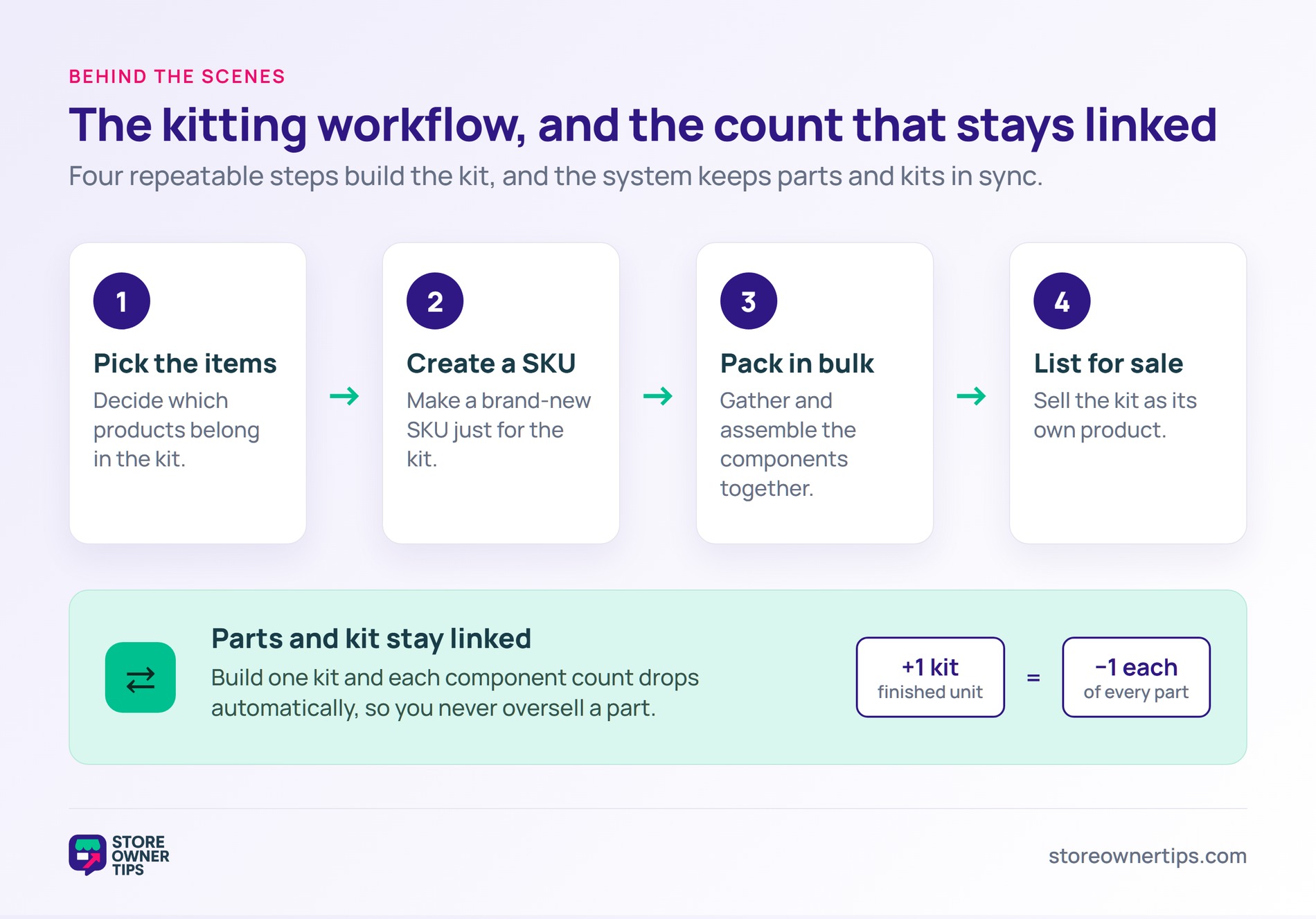
The kitting workflow is short and repeatable. First, you decide which items go into the kit. Next, you create a brand-new SKU just for that kit. Then your team gathers and packs the components in bulk. Finally, you list the kit for sale as its own product.
On WooCommerce or Shopify, you can model this with a dedicated bundle or assembled-product setup. Good inventory management matters here. When you build a kit, the system should pull each component out of available stock. That keeps your counts honest so you never oversell a part.
WooCommerce tools let you flag the kit as an assembled product made of inventory-managed parts. You can even choose to ship it fully assembled or as loose components. The point is that the kit and its parts stay linked. Build one kit, and the parts count drops automatically.
Kitting works on two levels at once. For the shopper, a kit removes guesswork. They get a curated set that “just works” together, which feels easier than picking parts alone.
For you, kitting is an operations win. Your pick-and-pack team handles one unit, not five. That speeds up order fulfillment and trims labor on every shipment. As a result, repeatable orders flow out the door faster and with fewer slip-ups.
There is also a training benefit that owners often miss. New warehouse hires learn one SKU faster than they learn a five-step pack list. So your busy season gets easier to staff. Meanwhile, every removed step is one fewer place where a mistake can sneak in.
The trickiest part of kitting is tracking two things at once. You have to know how many finished kits you hold and how many loose parts are left. If the two ever drift apart, you risk overselling a component. That is why your system must deduct parts the moment a kit is built.
It also pays to plan your buffer. If a single part runs low, every kit that uses it stalls. So smart stores hold a little extra safety stock on shared components. That way one slow shipment doesn’t freeze your whole kit lineup.
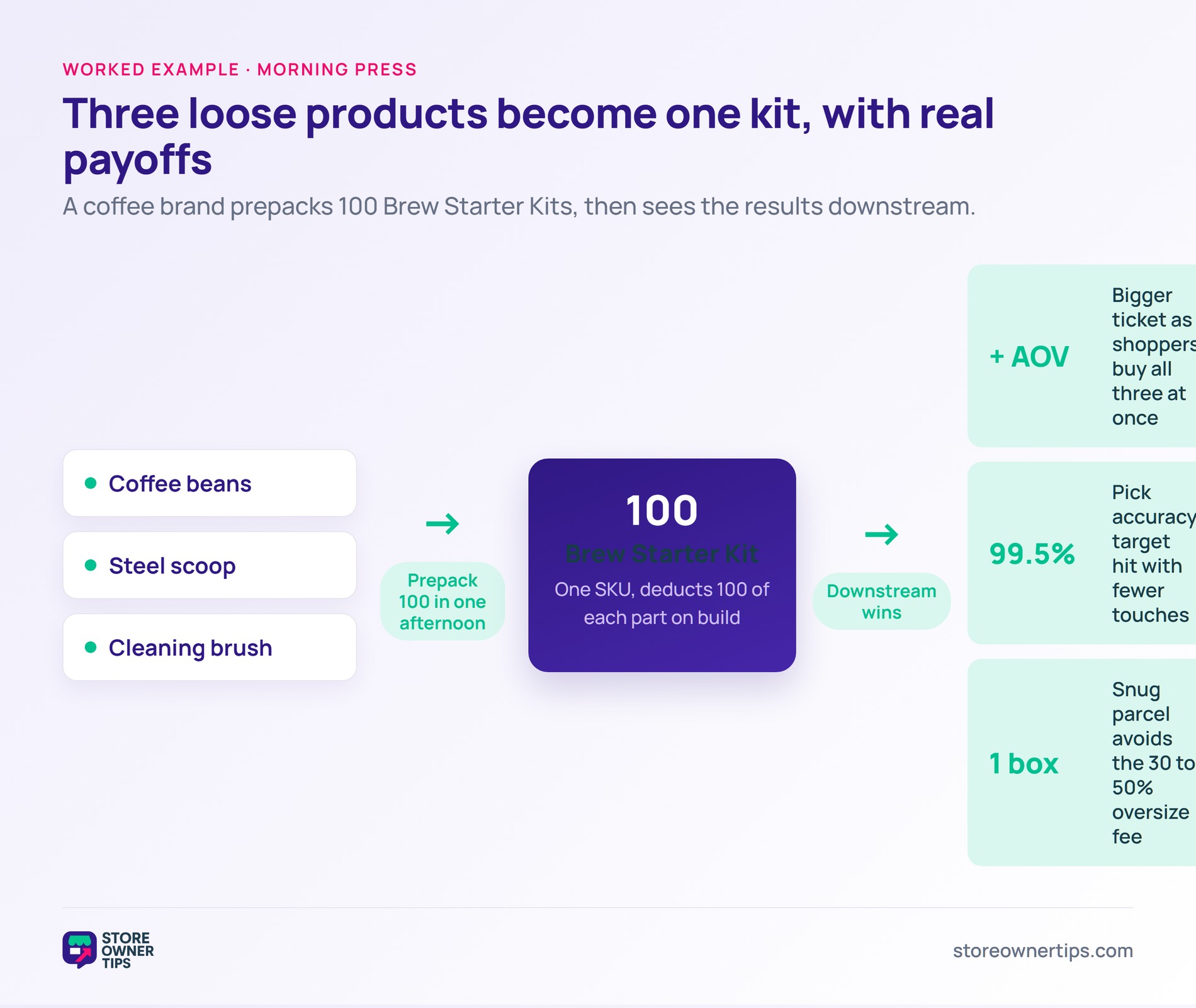
Imagine a mid-sized coffee roasting brand called Morning Press. They sell beans, a steel scoop, and a cleaning brush as separate products. Many first-time buyers want all three, but ordering them one by one feels like a chore.
Morning Press decides to build a “Brew Starter Kit.” They prepack the beans, scoop, and brush into one branded box. Then they create a single SKU for it and list it on their store. Now the kit sits on the shelf as one ready-to-ship product.
To start, they assemble 100 kits in a single afternoon. Doing it in one batch is far quicker than packing each set on demand. Their store system links the kit SKU to its three parts. So building 100 kits drops 100 units from each component count right away.
The shipping team also wins here. Instead of three loose items rattling in an oversized parcel, the kit fits one snug box. That matters, because one oversized box can cost 30 to 50 percent more than expected on carrier fees.
Before the kit, a typical single-item order sat near the ecommerce average order value of $133.77. The bundled kit pushes more shoppers to buy all three pieces at once. So the average ticket climbs, and units-per-order go up too.
On the warehouse side, packers now grab one prepacked kit per order. That cuts handling time. It also helps them hit the tight accuracy targets that global fulfillment centers aim for, around 99.5%. Fewer touches means fewer chances to ship the wrong item.
Morning Press does keep one eye on stock, though. Every kit they build ties up beans, a scoop, and a brush. If those parts sit unsold inside kits, they can’t be sold alone. So the team reviews kit demand and adjusts how many they prepack each month.
As volume grows, they hand kitting to a fulfillment partner. The partner stores the parts and prepacks kits on a set schedule. Morning Press just sends a kit request and the components. In turn, the brand spends its time on roasting and marketing, not packing boxes.
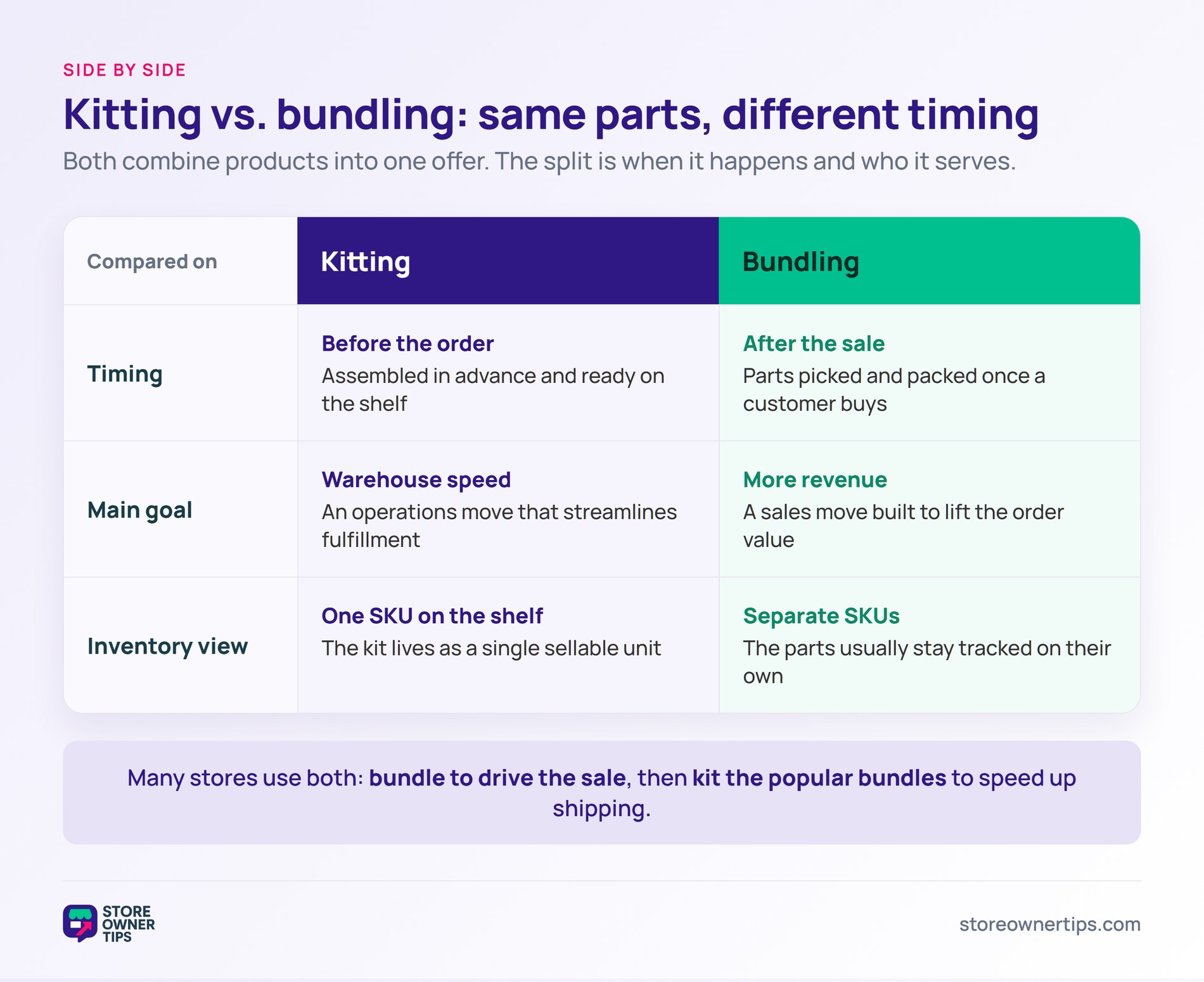
People mix up kitting and bundling all the time, but they solve different problems. Both combine several products into one offer. The split comes down to timing and who benefits most.
Kitting is an operations move. The items are physically packed together before any order arrives. By contrast, bundling is mostly a sales move. The products often stay as separate units and get picked one by one after a customer buys.
Here is a simple way to remember it. Kitting changes what sits on your shelf, while bundling changes how you market an offer. Many stores use both at once. They bundle to drive the sale, then kit the popular bundles to speed up shipping.
No, though they overlap. Kitting packs items together before orders arrive and treats them as one SKU. Bundling usually keeps items separate and packs them after a sale. In short, kitting is about warehouse speed, while bundling is about selling more.
You need a system that tracks both the kit and its parts. On WooCommerce or Shopify, a bundle or assembled-product feature can handle this. The key is that building a kit should deduct each component from your quantity on hand. That keeps your counts accurate.
Yes, and many stores do exactly that. A third-party logistics partner can assemble kits in their warehouse. You send the parts and a kit request, and they prepack the units for you. This frees you from doing the assembly in-house.
Kitting turns repeat multi-item orders into one fast, tidy package that ships in a snap. It saves labor, cuts packing mistakes, and can lift your average order value at the same time. For any store selling natural product sets, it is a simple lever with a real payoff. Done well, it scales with you from a back room to a full 3PL warehouse.
Copyright © StoreOwnerTips.com. All Rights Reserved.
